
Manufacturers are looking for higher levels of precision, consistency and flexibility in factory operations, and robotics manufacturing is increasingly playing a key role in achieving this goal. Today's robots are not just for assembly. They can assist in material handling, welding, inspection, packaging and other difficult areas while handling the increasingly connected production equipment. Production is thus moving towards systems that meet mechanical performance requirements and incorporate improved sensing, programming and operational adaptability.
Weekly Brief
Be first to read the latest tech news, Industry Leader's Insights, and CIO interviews of medium and large enterprises exclusively from The Manufacturing Outlook
TopRobotics Manufacturing Companies 2026
Robotics manufacturing companies design and produce automated systems for industrial, commercial and specialized applications. With a focus on mechanical precision, control reliability, integration readiness and production quality, they support smarter automation and more efficient operations.
Solutions
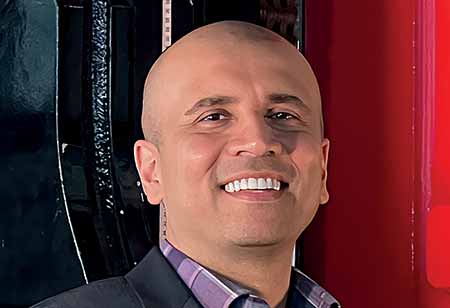
RISE Robotics
Building the Actuation Layer for the Next Era of Heavy Machinery
Hiten Sonpal, CEO
For decades, hydraulics have done the heavy lifting in industrial machinery: powerful, well understood, and backed by a supply chain manufacturers already trust. That’s not changing. What’s changing is the equipment around them, as it goes electric, adds sensors, runs on software, and sometimes operates with less direct human input.
State of Industry
Deep Dive
Fluid-Free Force for Robotics Manufacturing
Hydraulic actuation has become a part of heavy machinery that procurement teams hesitate to disturb, even while it keeps creating the same bills. Pumps, hoses, valves and fluid reservoirs add weight, leak exposure, service intervals and design drag. For robotics manufacturers and equipment builders, the issue is no longer whether hydraulics can generate force. The harder question is whether the force system can help a machine move faster, hold position accurately, report status and recover energy without adding another maintenance burden.
Robotics Manufacturing Companies Info
Q1
What Do Top Robotics Manufacturing Companies Do?
Top Robotics Manufacturing Companies design, engineer, produce, integrate and support robotic equipment used to automate physical tasks in manufacturing and industrial environments. Their work can span robotic arms, mobile platforms, end-of-arm tooling, motion systems, controls and application-specific machines. Robotics manufacturers typically combine mechanical engineering, electronics, software and systems integration so equipment can perform repetitive, precise, hazardous or labor-intensive work reliably.
Q2
What Products and Services Do Robotics Manufacturing Companies Typically Provide?
Offerings can include complete robots, subsystems, controls, sensors, grippers, safety components, integration support, programming, commissioning and lifecycle services. Top Robotics Manufacturing Companies may also adapt robotic systems for material handling, assembly, welding, inspection, packaging, machine tending and other production processes. The exact scope varies by supplier, so manufacturers should distinguish between equipment builders, component specialists and firms that provide broader automation engineering and deployment support.
Q3
What Is Driving Demand for Robotics Manufacturing Solutions?
Demand is being shaped by pressure to improve productivity, manage labor constraints, increase consistency and make production more flexible. Manufacturers are also seeking automation that can handle shorter production runs, changing product mixes and tighter quality expectations. Top Robotics Manufacturing Companies respond to these needs by developing systems that are easier to program, integrate and redeploy. Industrial automation demand also grows when businesses need better process visibility, safer operations or more predictable throughput.
Q4
How Should Top Robotics Manufacturing Companies Be Evaluated?
Evaluation should focus on technical fit, reliability, integration requirements, safety, serviceability and the supplier’s ability to support the intended application over time. Top Robotics Manufacturing Companies should be assessed on payload, reach, speed, precision, controls compatibility, software usability and maintenance needs where those factors apply. Buyers should also examine deployment complexity, training, support response, spare-parts availability and total operating cost rather than comparing equipment only on purchase price.
Q5
How Can Robotics Manufacturing Create Measurable Operational Value?
Robotics can create value by increasing repeatability, reducing manual handling, improving process consistency and keeping production moving through tasks that are difficult to staff or physically demanding. Top Robotics Manufacturing Companies can support these outcomes when robotic systems are matched to clear production bottlenecks and measurable performance goals. Value may appear through higher throughput, fewer quality deviations, reduced downtime, improved worker safety, lower rework or more efficient use of labor and equipment.
Q6
What Role Do Technology and Innovation Play in Robotics Manufacturing?
Technology influences how effectively robots perceive conditions, make controlled movements, exchange production data and adapt to changing tasks. Top Robotics Manufacturing Companies increasingly work across motion control, machine vision, sensing, software, connectivity and intelligent automation to make systems more capable and practical to deploy. Innovation matters most when it improves reliability, usability, maintainability or application flexibility rather than adding complexity. Strong engineering also helps robotic systems fit existing workflows and scale with future production requirements.
