
Weekly Brief
Be first to read the latest tech news, Industry Leader's Insights, and CIO interviews of medium and large enterprises exclusively from The Manufacturing Outlook
The Manufacturing Outlook: Specials Magazine
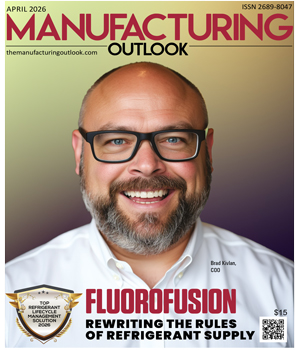
Why are refrigerants considered critical infrastructure in modern industrial and daily life systems? Refrigerants are not just industrial chemicals. They are the invisible infrastructure behind modern life—cooling homes and offices, preserving food and medicine in supermarkets and hospitals, enabling food transport and supporting critical industrial processes. The companies that manage them responsibly determine whether that infrastructure is sustainable. FluoroFusion, an EPA-certified refrigerant reclaimer, was founded in 2018 on the thesis that used, contaminated refrigerants are not waste, they are feedstock. That premise has since become the foundation of one of the most significant business models in the HVACR industry. How does FluoroFusion’s circular refrigerant model differ from traditional linear supply approaches? The company has built a closed-loop refrigerant management system protected by seven Life-Cycle Refrigerant Management patents, with more pending, operates an on-site AHRI 700 certified lab and recently introduced a proprietary refrigerant blend designated R-4106A. It is a trajectory that carries particular weight because the industry it is revamping has long opposed any structural change. The refrigerant industry has been dominated by a few large chemical companies whose revenue depends on the continuous production and sale of virgin refrigerants. That linear model of produce, sell, move on, has left an enormous gap in the circular economy. In the U.S, only 1.6 percent of hydrofluorocarbons are currently reclaimed, a fraction of what is achieved in Europe and Japan. FluoroFusion precisely address this gap. Where the linear model treats each refrigerant sale as a terminal transaction, FluoroFusion’s circular model is predicated on recovering, purifying and recirculating material that the linear supply chain discards. That inversion—treating end-of-life refrigerant as a supply input rather than a disposal problem—is the core disruption. “We are not just a refrigerant supplier. We are a technology company that has developed a truly circular model for refrigerant management,” says Brad Kivlan, COO.
Georg Utz
Engineering Reusable Containers for Automated Systems
Hugo Ramos, VP of Sales and Marketing
Why do reusable containers function as engineered components in highly automated manufacturing systems? In modern factories and warehouses, reusable plastic containers do more than hold products. In highly automated environments, they function as engineered components within the system itself. A bin, for example, is filled with components, picked up by a robotic arm, placed onto a conveyor and transported through sorting. It is then stacked in an automated storage system, where another robot may later retrieve it to begin the cycle again. The container moves continuously through equipment designed for precision and speed. When containers are even slightly off in size or shape, automation can falter. Robotic handling may misalign. Conveyors may jam. Operators may be forced to pause systems to recalibrate or intervene. What appears to be a simple storage unit becomes a variable that disrupts throughput. Georg Utz designs and manufactures reusable plastic containers for these highly automated, high-throughput industrial applications, where dimensional stability and repeatable performance are non-negotiable. “We approach reusable plastic container manufacturing through a customer-and application-centric lens,” says Hugo Ramos, VP of sales and marketing. “That means products are developed not only to withstand load, but to maintain consistent performance inside high-throughput systems over years of operation.” Each project begins with a detailed understanding of the customer’s process and its requirements, system interfaces, expected cycle frequency and long-term operational objectives. Containers are designed around how they will perform inside real workflows, so they evolve with automation from the outset rather than adapting to it later..

Contract Manufacturing

Skilled tradesmen are the backbone of countless industries, turning vision into reality with hands-on expertise. However, a growing focus on conventional STEM careers has pushed many people to overlook the trades, resulting in a critical shortage of skilled craftsmen. The Las Vegas Institute of Welding (LVIW), a woman-owned small business, opens doors to successful careers in skilled trades. It offers comprehensive welding courses that prepare students for long-term success. LVIW’s owner and CEO Gabrielle “Brie” Roper has been around the welding and fabrication industry most her life, working alongside her husband, holding ownership, management, and leadership positions in their fabrication and metal finishing companies in Southern Nevada. She realized that finding and retaining qualified welders and fabricators remained a persistent industry challenge. LVIW was founded to address this shortage. It offers courses covering techniques like stick welding, metal inert gas and dual shield. It nurtures individual potential through practical instruction and connects students to successful career opportunities. “We open doors for individuals to get their foot in the welding trade and start building a successful career,” says Eric Roper, Founder. LVIW’s program offers recognized welding certifications from the American Welding Society, equipping learners with official endorsements. Students also earn essential certifications that emphasize workplace safety and readiness, including OSHA 10, forklift operation and CPR.
Top 3D Simulation Modeling Platfrom 2026
In manufacturing, simulation is meant to accelerate innovation. Too often, it does the opposite. Engineers juggle disconnected tools for design, meshing, simulation, and evaluation, turning what should be a competitive advantage into a time-consuming bottleneck. Khorium aims to change that by unifying and automating the entire simulation workflow, helping engineering teams move faster from design to production. Trained as an aerospace engineer, Aaron Wu combines expertise in physics, AI, and advanced manufacturing, spanning hyperscale simulation, CFD, and rocket propulsion. Building on this foundation, he founded Khorium, an AI-driven simulation acceleration platform for engineers designing physical products. Rather than replacing existing CAD or simulation software, the platform connects these tools into a single, coordinated system, reducing manual effort and shortening development cycles. “We do not replace workflows; we automate them end to end with AI, freeing engineers to focus on real physics, creative design, and engineering decisions,” says Wu, Founder and CEO of Khorium. Automating the Simulation Loop How does Khorium automate the simulation loop end to end? Khorium builds infrastructure to run simulations efficiently. With its platform, companies design and test parts from any device, anywhere, using a centralized cloud-based platform. This approach removes infrastructure complexity and offers a flexible, economical business model.

Material Handling

Making the Switch from Prototyping to Production
Bob Yancey, Business Development Director, Hexcel
Contract Manufacturing

Doubling Down on Operations: Sustainability to Meet Organization Goals
Kevin Brown, Senior Vice President Global Operations, Milliken & Company
Composite
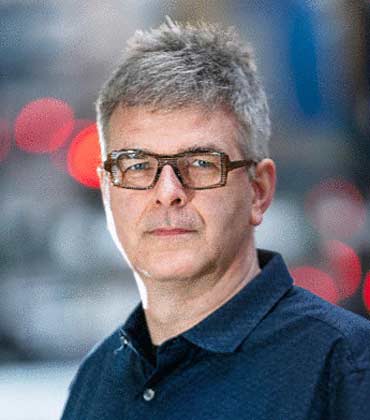
Driving Holistic Sustainable Packaging Solutions
Martin Rathgeber, Director of Engineering, Studio One Eleven
Industrial Automation

Guiding Retail Teams Through Continuous Transformation
Monica Villela Millan, Head of Retail Training, Mercedes-Benz USA [MBGAF:OTCPK]
Contract Manufacturing

Driving Manufacturing Excellence Through People, Discipline And Long-Term Vision
Carlos Soto, Head of Americas Manufacturing, Teleflex

IN MY OPINION
Contract Manufacturing
Building Specialized Silicon at Industrial Volume
Danny Kohanek, SVP of Manufacturing, SUMCO [TYO: 3436]

LAST WORD
Chemical Manufacturing
Factory Simulation-The Key to Scaling
Paul Guerrier, Manufacturing Engineering Manager, Moog Inc.
IN FOCUS

Building a Circular Economy: The Impact of Reusable Plastic Container Design and Technology
Reusable plastic container manufacturers drive circular manufacturing through durable design, digital tracking, closed-loop reuse, and measurable sustainability gains.
Advancing Sustainable Cooling through Refrigerant Lifecycle Management Solutions
Growing regulations, digital technologies, and sustainability goals are accelerating the adoption of advanced refrigerant lifecycle management solutions across the global cooling industries.
EDITORIAL
Designing Manufacturing for System-Level Performance
Manufacturing systems are increasingly defined by their ability to integrate precision, scalability, and lifecycle accountability into daily operations. This edition of Manufacturing Outlook examines how organizations are moving beyond fragmented execution toward unified, process-driven systems that strengthen operational control and sustain long-term performance.
Our cover story, FluoroFusion, recognized as the Top Refrigerant Lifecycle Management Solution 2026, represents a structural shift in refrigerant management. By advancing a closed-loop model that treats recovered refrigerants as feedstock rather than waste, the company is redefining supply economics in HVACR. Its introduction of R-4106A further challenges conventional environmental metrics, positioning FluoroFusion as both an infrastructure builder and a catalyst for circularity in an industry historically shaped by linear supply models.
Georg Utz, recognized as the Top Reusable Plastic Container Manufacturer of the Year 2026, demonstrates how engineering precision underpins automation at scale. Its containers function as integral system components, ensuring dimensional stability across high-throughput environments. By prioritizing lifecycle performance over unit cost and embedding digital traceability through its Smart RTP initiatives, the company enables predictable, scalable automation across global operations.
Teleflex, recognized as the Top Manufacturing Leader 2026, underscores the role of leadership systems in sustaining performance. Its approach aligns strategy with execution through structured operating rhythms, enhanced data visibility, and leadership development from the shop floor upward. The emphasis on safety, quality, and workforce engagement reflects a model where consistency drives measurable outcomes.
From a leadership perspective, Danny Kohanek, SVP of Manufacturing at SUMCO, outlines how high-volume silicon manufacturing depends on rigorous process control, cross-functional coordination, and statistical discipline to manage complexity at scale. Martin Rathgeber, Director of Engineering at Studio One Eleven, highlights the importance of lifecycle thinking, integrated design, and material optimization in delivering sustainable packaging solutions without compromising performance.
Collectively, these perspectives signal a clear direction: system-driven execution, lifecycle accountability, and leadership discipline are defining the next phase of manufacturing. We invite you to explore how these models are shaping more resilient, scalable, and performance-driven industrial environments.
