
Weekly Brief
Be first to read the latest tech news, Industry Leader's Insights, and CIO interviews of medium and large enterprises exclusively from The Manufacturing Outlook
The Manufacturing Outlook: Specials Magazine

Metal stamping is the backbone of modern automotive manufacturing. From structural brackets to exhaust system components, stamped steel parts must meet razor-thin tolerances—day in, day out—at volumes in the millions. Automakers count on their suppliers for precision, consistency, speed, and cost control. That level of performance doesn’t happen by accident. It takes experience, technical depth, and a relentless focus on quality. Few companies embody that better than Canada Stampings, a supplier with over 130 years of metalworking heritage. What began in the late 1800s as a wagon wheel shop has evolved into a full-service Tier-2 and Tier-3 supplier specializing in high-precision metal stamping, welding, and tooling. Today, the company produces built-to-print steel components for vehicles across the U.S., with 70 percent of its output dedicated specifically to exhaust system components, where accuracy and durability are mission-critical. The commitment to precision is matched by the company’s agility. As a mid-sized operation, Canada Stampings leverages its lean structure and seasoned team to bypass red tape, address concerns in real time, and keep production on track. That responsiveness has earned the trust of customers who rely on fast, dependable support. “Our vision is to lead the future of manufacturing by delivering parts that meet the highest standards of precision and empower our partners to achieve new levels of success. Our products lay the groundwork for the future, becoming the building blocks of progress and expanding the capabilities of OEMs,” says Jim Myers, General Manager. Canada Stampings offers a full range of precision metal stamping services, supported by robust in-house and global capabilities. With seven press lines ranging from 60 to 600 tonnes, the company is equipped to handle a wide variety of stamping requirements with speed, consistency, and high-quality results. Capacity is carefully managed to ensure that every order—regardless of volume—is delivered on time and to specification. Supporting this is a fully equipped tool room and a state-of-the-art quality lab that drives continuous improvement and ensures adherence to the highest safety and performance standards.

Sustainable Plastic
Polyethics and EcoPoly
Pioneers in Creating Environmentally Friendly Solutions
Derek Rynard, CEO and Kristan Rynard, Chief Sales Officer
The plastic manufacturing industry today strives to balance the need for performance and sustainability. Manufacturers, however, need help with regulatory compliance, rising consumer demand for sustainable products, and technical difficulties in creating eco-friendly plastics without sacrificing quality. Stricter regulations and eco-conscious consumers push companies to innovate.
Overcoming these hurdles requires investment in advanced material science, collaboration with industry leaders, sustainable design practices, and consumer education.
Polyethics and EcoPoly are at the forefront of addressing some of the most pressing challenges in the plastic manufacturing industry. Their commitment to sustainability is evident through their multifaceted approach, which includes regulatory compliance, consumer demand satisfaction, and technical innovation.
“We prioritize staying ahead of regulatory changes, ensuring that our products consistently meet or exceed industry standards,” says Kristan Rynard, EcoPoly’s chief sales officer.
Maintaining a proactive stance on compliance, they adhere to existing regulations and anticipate future requirements. This forward-thinking approach allows them to provide safe, reliable, and environmentally responsible products. Their dedication to regulatory compliance positions them as trusted leaders in the industry, fostering confidence among consumers and stakeholders alike.
Reducing Plastic Waste
“We are committed to reducing plastic waste through cutting-edge technologies, sustainable materials, and a holistic approach to environmental responsibility,” says Rynard.
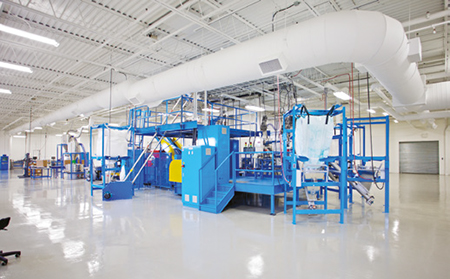 Recognizing the growing consumer demand for sustainable products, Polyethics and EcoPoly focus on innovation to create solutions that are both eco-friendly and appealing to the market. They understand that sustainability alone is insufficient; products must meet consumers’ functional and aesthetic expectations.
Developing sustainable plastics that do not compromise on quality or performance drives market adoption and supports the shift toward greener alternatives. Their efforts to align product development with consumer preferences ensure they remain competitive and relevant in a rapidly evolving market.
Polyethics and EcoPoly’s success stems from their commitment to technical innovation. They invest heavily in research and development to enhance their products’ performance and environmental impact. This investment enables them to pioneer new materials and processes that reduce the ecological footprint of plastic manufacturing. By continually pushing the boundaries of what is possible, they create sustainable plastics that set new benchmarks for the industry.
Giving Consumers More Sustainable Options
Polyethics and EcoPoly create degradable plastics made from recycled materials that help prevent plastic pollution by giving consumers more sustainable options. When exposed to environmental conditions, their products break down more rapidly than traditional plastics. This helps prevent long-term pollution and keeps plastic out of landfills.
Polyethics and EcoPoly also use recycled materials and bio-based polymers to create products with a lower environmental footprint from the outset. Their commitment to sustainability includes the end product and the entire manufacturing process, ensuring minimal waste and energy usage.
For example, a primary food service provider aimed to enhance sustainability, minimize waste, and promote a circular economy. Polyethics partnered with the provider to develop a closed-loop system. They supplied degradable can liners made from 100 percent recycled materials, meeting performance needs while significantly reducing environmental impact. They implemented a backhaul program, collecting used flexible plastic packaging during regular deliveries, minimizing operational disruption.
Recognizing the growing consumer demand for sustainable products, Polyethics and EcoPoly focus on innovation to create solutions that are both eco-friendly and appealing to the market. They understand that sustainability alone is insufficient; products must meet consumers’ functional and aesthetic expectations.
Developing sustainable plastics that do not compromise on quality or performance drives market adoption and supports the shift toward greener alternatives. Their efforts to align product development with consumer preferences ensure they remain competitive and relevant in a rapidly evolving market.
Polyethics and EcoPoly’s success stems from their commitment to technical innovation. They invest heavily in research and development to enhance their products’ performance and environmental impact. This investment enables them to pioneer new materials and processes that reduce the ecological footprint of plastic manufacturing. By continually pushing the boundaries of what is possible, they create sustainable plastics that set new benchmarks for the industry.
Giving Consumers More Sustainable Options
Polyethics and EcoPoly create degradable plastics made from recycled materials that help prevent plastic pollution by giving consumers more sustainable options. When exposed to environmental conditions, their products break down more rapidly than traditional plastics. This helps prevent long-term pollution and keeps plastic out of landfills.
Polyethics and EcoPoly also use recycled materials and bio-based polymers to create products with a lower environmental footprint from the outset. Their commitment to sustainability includes the end product and the entire manufacturing process, ensuring minimal waste and energy usage.
For example, a primary food service provider aimed to enhance sustainability, minimize waste, and promote a circular economy. Polyethics partnered with the provider to develop a closed-loop system. They supplied degradable can liners made from 100 percent recycled materials, meeting performance needs while significantly reducing environmental impact. They implemented a backhaul program, collecting used flexible plastic packaging during regular deliveries, minimizing operational disruption.

Contract Manufacturing

Flux Connectivity, a leading contract manufacturer of mission-critical assemblies, offers the perfect mixture of innovation and customer-centric solutions that power the growth engines of its clients. Quality is a central tenet that drives every aspect of the company’s operations. Through thorough testing, including electrical and mechanical evaluations, Flux Connectivity ensures that all manufactured products meet the highest standards. Service that Transcends the Ordinary Every project is handled by a team of experienced manufacturing professionals who understand the intricacies and challenges of contract manufacturing. With knowledge across diverse industries, they optimize production processes and enhance overall efficiency. Clients can be assured that their success is prioritized from the outset. “We operate as a unified team, transcending roles to create a cohesive customer experience that aligns perfectly with their expectations,” says Adam Amos, CEO. Each team member is committed to providing innovative manufacturing services by constantly exploring new technologies, processes and materials to stay ahead of industry trends. Design for manufacturing support is a service they offer for efficient and cost-effective production. Prototyping and new product introduction services further facilitate quick product design validation, rectifying issues before mass production. This assures a seamless transition from prototyping to full-scale manufacturing while minimizing time-to-market and associated risks. Flexibility is Flux Connectivity’s core characteristic, and its ability to offer scalable manufacturing solutions that adapt effortlessly to changing market demands is a rarity in the industry. Whether organizations need to ramp up production volumes or introduce new product variations, the company possesses the capabilities to respond swiftly, guaranteeing uninterrupted operations and business continuity. Customization options are also offered to accommodate low-volume, high-mix production and high-volume, repetitive manufacturing demands. Its technological capabilities give customers a competitive edge. Staying up-to-date with the latest advancements, the company leverages technologies like Industry 4.0, IoT and AI to automate processes and boost productivity. This commitment to innovation positions Flux Connectivity and its clients at the forefront of the manufacturing industry.
Metal Working

Large-Format Metal AM Coming of Age
D. Mark Douglass, Business Development Manager, Additive Solutions, Lincoln Electric [NASDAQ: LECO]
Industrial Automation

Accelerating Innovation with Additive Manufacturing: Breakthroughs Achieved in Weeks
Yohann Rousselet, Global Director, Technology Innovation, Baltimore Aircoil Company
Industrial Coating

Motivating and Challenging Technical Professionals in a Manufacturing Environment
Scott Marcus, Process Engineering Manager, Flex-N-Gate
Industrial Automation

Leadership in Manufacturing
Michael Spliedt, Senior Engineering Manager, Yanfeng Global Automotive Interiors
Metal Working

Exploring the Future of Automobile Industry
Terrance H. Slaughter, Plant Production Manager, Toyota North America
Industrial Automation

Lean Trends: Navigating Business Requirement Challenges
Juan Carrera, SVP Global Operations and Operational Excellence, Flowserve Corporation [NYSE: FLS]
Metal Working

Evolutions In The Auto Tech Industry
Nick Rumberger, Executive Director, Engineering & Sales, BILSTEIN

IN MY OPINION
Metal Working
Safeguarding the Road Ahead: the Crucial Confluence of Cybersecurity and Functional
Mohsen Norouzi, Chief Operating Officer (COO), TÜV NORD Mobilität GmbH & Co. KG
LAST WORD
Industrial Equipment
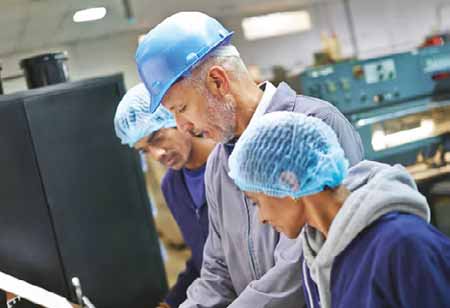
Optimizing Molding Processes And Driving R&D Excellence
Eric Huang, Engineering Manager, Alcon
IN FOCUS

Maintaining Standards in Canada's Precision Metal Stamping Sector
Quality assurance in Canadian precision metal stamping relies on industry standards, thorough testing, documentation, and continuous improvement to ensure high-performance, reliable metal products.

The Role of Metal Stamping in Canada's Advanced Manufacturing Future
Precision metal stamping is crucial to Canada's manufacturing sector, serving industries such as automotive, electronics, and medical devices by producing high-tolerance components efficiently while embracing technological advancements.
EDITORIAL
Manufacturing Forward Through Innovation and Adaptability
Global manufacturing is undergoing a high-stakes transformation. As technology advances and economic pressures mount, companies aren’t just adapting— they’re reinventing how they operate. Agility, innovation, and end-to-end visibility are becoming the new benchmarks of industrial strength. Canada is stepping into this moment with both urgency and ambition. Backed by a skilled workforce and a strong presence in sectors like aerospace, automotive, and clean energy, the country is well-positioned—but not without hurdles. Persistent labor shortages, aging facilities, and supply chain fragility threaten to hold the sector back.
To counter these challenges, Canadian manufacturers are rethinking traditional production models. There is a renewed focus on automation, predictive maintenance, and data integration—tools that help plants optimize performance, reduce waste, and adapt more quickly to market shifts. Training programs and partnerships with educational institutions are also helping to build a skilled talent pipeline for the future.
Sustainability has emerged as both a responsibility and an opportunity. Many firms are integrating greener processes, lowering emissions, and sourcing materials locally to reduce their environmental footprint. At the same time, the shift toward circular economy principles is unlocking innovation across product design, logistics, and lifecycle management— propelling Canadian manufacturing toward a more sustainable and globally resilient model.
This edition of Manufacturing Outlook Canada explores how manufacturers across industries are adopting cutting-edge technologies, strengthening supply chains, and developing talent pipelines to ensure long-term growth and global leadership.
It features insights from Mohsen Norouzi, Chief Operating Officer (COO) at TÜV NORD Mobilität GmbH & Co. KG, who discusses how the automotive landscape has evolved significantly over the years. He highlights how the new generation of vehicles holds immense promise, with advanced technologies poised to revolutionize transportation and improve both safety and efficiency. Eric Huang, Engineering Manager at Alcon, also shares his experience managing complex molding processes in the R&D Pilot Molding Lab, emphasizing the importance of creating a stress-free environment for technicians and optimizing processes to enhance quality and efficiency.
We hope this edition offers valuable perspectives on the innovation, challenges, and opportunities shaping Canadian manufacturing—and inspires new approaches that drive progress across the sector.
