
Weekly Brief
Be first to read the latest tech news, Industry Leader's Insights, and CIO interviews of medium and large enterprises exclusively from The Manufacturing Outlook
The Manufacturing Outlook: Specials Magazine
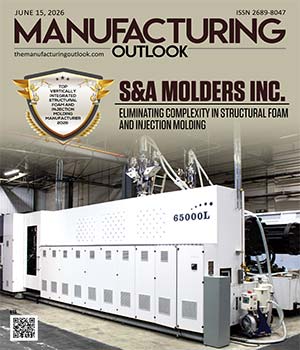
What challenges arise from fragmented workflows in structural foam and injection molding operations? S&A Molders did not set out to simply compete in the structural foam and injection molding space. The company built its position by questioning why the process had to be so complicated in the first place. In an industry where multiple vendors, fragmented timelines, and inconsistent communication are often treated as unavoidable, S&A Molders has taken a different route that prioritizes continuity, control, and accountability from start to finish. At its core, S&A Molders is a vertically integrated manufacturing partner. But that phrase, often overused in the industry, carries a more literal meaning within its operations. The company is structured to support a product from its earliest stage of ideation all the way through to final shipment, without handing it off between disconnected suppliers. Tool design, mold creation, production, secondary operations, packaging, and logistics are all handled in-house, forming a single, coordinated workflow rather than a chain of separate transactions. “We can take a product from an idea all the way through to final shipment without the customer needing to involve multiple suppliers,” says Brittany O’Brien, vice president of S&A Molders. “That continuity allows us to control quality, timing, and communication in a way that is very difficult to achieve otherwise.” How does vertical integration improve predictability, coordination, and cost control in manufacturing processes? That continuity is not just operational; it is strategic. Many of the company’s clients arrive after dealing with the inefficiencies of split production models, where one vendor molds parts, another completes finishing work, and yet another manages packaging or distribution. Each transition introduces delays, misalignment, and often added cost. By consolidating these processes, S&A Molders removes those friction points and replaces them with a system that is easier to manage and far more predictable. Adaptability Grounded in Structure Why is structured documentation and process visibility essential for managing diverse manufacturing requirements? S&A Molders’ reach across industries speaks to the flexibility of this model. It works with clients in automotive, medical, aviation, industrial manufacturing, and utilities, producing everything from traffic control equipment to highly regulated components used in critical environments. Rather than specializing in a narrow niche, S&A Molders has built a framework that can adapt to different requirements without losing efficiency. The company’s adaptability is grounded in structure. Every product that moves through the facility follows a clearly documented path, beginning with raw material intake and continuing through production, finishing, and shipment. Work orders are tracked in detail, and process ownership is clearly defined at each stage. This level of documentation allows the team to understand not only what is happening, but also why it is happening and what might need to change. It also creates a level of visibility that clients rarely experience elsewhere. If timelines shift or priorities change, S&A Molders can respond with precision rather than approximation. The team can identify exactly where a product is in the process, what adjustments are possible, and what constraints need to be considered. That clarity reduces uncertainty, which in turn reduces risk. “We understand not just what we’re doing today, but what might impact us months down the line,” O’Brien explains. “This allows us to be proactive rather than reactive, whether it’s sourcing materials or planning production.” Anticipating Shifts in Availability and Pricing Material sourcing is one of the areas where this forward-looking approach has the greatest impact. The plastics and resins used in structural foam and injection molding are subject to ongoing fluctuations, influenced by everything from global supply chains to political conditions. Rather than reacting to these changes after they occur, S&A Molders tracks trends at their origin, allowing it to anticipate shifts in availability and pricing. This awareness is paired with the physical capacity to act on it. The company maintains significant on-site storage for both raw materials and finished products, giving clients the option to secure supply in advance without taking on additional logistical burdens. In a volatile market, that flexibility can make a measurable difference in both cost and continuity.
Industrial Equipment
Fasteners Direct LLC
Reinventing Fastener Performance using “B2” Plating
Randy Ridenour, “B2” Product Promotion Manager, Kevin Wiggam, CEP; Owner
The smallest components often shoulder the greatest responsibility. This statement rings especially true for fasteners, as they hold massive structures together firmly. Despite their strength and purpose, these connectors corrode easily when exposed to the forces of nature—salt-laden water, a chemical-heavy environment or the clash of dissimilar metals. Fasteners Direct LLC is resolving this challenge head-on with its corrosion-resistant fasteners, engineered to endure even the harshest environments. Powered by the innovative “B2” plating process, Kevin Wiggam’s company holds exclusive marketing and distribution rights for this cutting-edge technology across North America—setting a new industry standard in corrosion resistance. The “B2” metallic coating is diffused into the steel through a patented proprietary process, delivering ‘total protection.’ Unlike conventional coatings that merely sit on top, the “B2” process directly embeds the coating into the steel. This ensures it can’t be removed during installation, guaranteeing total screw corrosion protection from the head to the point of the fastener, even after the rigors of being installed. “Our advanced plating technology gives us a natural edge in the industry. We set ourselves apart in performance and delivering lasting solutions to our customers,” says Randy Ridenour, “B2” Product Promotion Manager. Fasteners that are Built to Last Fasteners Direct LLC takes a collaborative route instead of leaving clients with a catalog of fasteners. It works closely with every stakeholder in the construction ecosystem, from steel producers and coil coaters to paint suppliers, ensuring that the entire assembly is optimized and each fastener connection is compatible. The goal is to offer a fully compatible assembly that preserves every stakeholder’s warranty and optimizes performance across all environments.

Top Industrial Monitors and Touch Screens Manufacturer 2026

Hope Industrial Systems equips factory floors with rugged, precision-engineered monitors and touchscreens, purpose-built to withstand the demanding industrial environments. Every unit is designed and hand-assembled in Atlanta, Georgia, under 100 percent private ownership. This independence ensures complete control over quality, service and customer experience. By focusing exclusively on industrial displays, Hope Industrial delivers expert craftsmanship and dependable performance. Each monitor is UL-certified for its NEMA and IP ratings and is field-proven to operate reliably, with an MTBF of over 250,000 hours. They are also backed by the industry’s longest standard warranty of five years, providing customers with peace of mind even in the harshest factory conditions. “Our success comes down to a single principle of creating a positive customer experience every time,” says Mike McGraw, president. That philosophy has earned the company a reputation for reliability, with more than 90 percent of its business coming from repeat customers. With installations spanning seven continents and a global distribution network, Hope Industrial’s products are trusted worldwide. They serve industries as diverse as aerospace, automotive, food and beverage, medical, transportation, and energy. The durability of these monitors makes them equally effective in amusement parks, pharmaceutical cleanrooms or even on ships navigating Antarctic waters. Regardless of the setting, clients benefit from equipment that is built to last and tailored for industrial performance.
Top Metal Fabrication and Structural Welding Services 2026
Metal fabrication and structural welding projects often struggle with a fundamental constraint: quality assurance is typically treated as a final checkpoint, leaving little room to correct errors without impacting timelines. Rework, delays and compliance risks frequently arise when quality is not integrated into the production process itself. Weldit addresses this challenge by embedding real-time quality assurance directly into its workflow. Instead of relying on post-process inspection, it monitors welding parameters continuously. “We treat quality control as a continuous data stream,” says Saud Khan, managing partner. Turning Quality into a Continuous Process A major issue in fabrication environments is the reliance on reactive quality control. Errors identified late in the process often result in rework, which directly affects delivery timelines and project costs. Weldit addresses this through Industry 4.0-enabled welding systems that provide immediate feedback on variables such as heat input, travel speed and penetration. This enables a first-time-right approach, reducing the need for corrections after fabrication is complete.
Contract Manufacturing

Doubling Down on Operations: Sustainability to Meet Organization Goals
Kevin Brown, Senior Vice President Global Operations, Milliken & Company
Composite

Driving Holistic Sustainable Packaging Solutions
Martin Rathgeber, Director of Engineering, Studio One Eleven
Personal Care Contract Manufacturing

Contract Manufacturing: Where Idea Becomes Reality
Beata Lawson, Sr. Director of Global Manufacturing, Quality & Regulatory Compliance, Performance Beauty Group
Contract Manufacturing
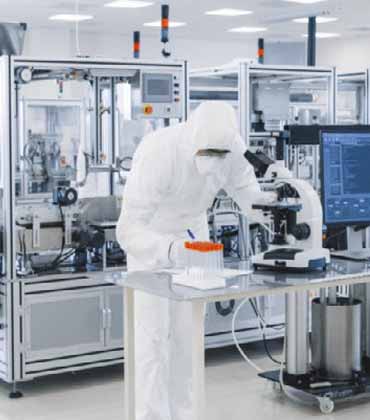
Quality in the World of Medical Device Contract Manufacturing
Stacey Lyons, Director of Quality of Biomerics
Industrial Equipment
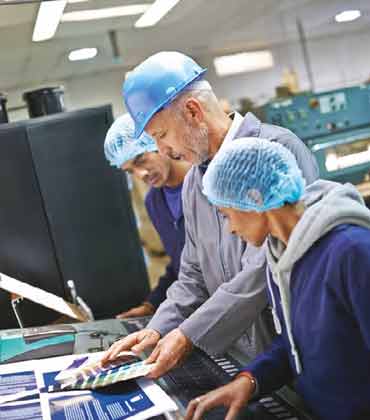
Optimizing Molding Processes And Driving R&D Excellence
Eric Huang, Engineering Manager, Alcon

IN MY OPINION
Material Handling
Making the Switch from Prototyping to Production
Bob Yancey, Business Development Director, Hexcel

LAST WORD
Sustainable Packaging
Meeting Sustainable Packaging Goals in the Automotive Industry
Steven R. Sopher, Executive Vice President, JSP
IN FOCUS

Vertical Integration Reshapes Structural Foam Manufacturing Industry Landscape
Vertically integrated manufacturers enhance reliability, cost control, and coordination, helping industrial clients navigate complexity while strengthening long-term production partnerships and performance.
Charting the Growth of Industrial Touchscreen Technologies in Manufacturing
Industrial touchscreens are transforming manufacturing by simplifying human-machine interaction,
EDITORIAL
Reshaping Modern Manufacturing Through Operational Advantage
Manufacturing companies are increasingly evaluated by how effectively they manage complexity across production, sourcing, quality and delivery while responding to shifting market demands. Reliability, visibility and execution discipline have become critical competitive advantages in a more interconnected manufacturing environment. This edition of Manufacturing Outlook explores the operational strategies and leadership approaches reshaping modern manufacturing.
Our cover story, S&A Molders Inc., recognized as the Top Vertically Integrated Structural Foam and Injection Molding Manufacturer 2026, represents that evolution. The company has built its business around a simple yet increasingly important idea: manufacturing performs better when critical functions operate within a single, connected system rather than across fragmented supplier networks. By integrating tool design, mold production, manufacturing, secondary operations, packaging and logistics under a single structure, S&A Molders has created a model centered on accountability, continuity and process control. Its ability to support customers across automotive, aviation, medical and industrial sectors while maintaining operational clarity reflects a disciplined approach that prioritizes long-term execution over short-term scale.
This edition also highlights leaders addressing some of manufacturing’s most pressing technical and operational challenges. Bob Yancey, Business Development Director at Hexcel, examines the transition of additive manufacturing from prototyping into production environments. His perspective underscores the importance of material qualification, process validation and component consistency as additive manufacturing moves toward broader industrial adoption.
Stacey Lyons, Director of Quality at Biomerics, offers a detailed look at the role of quality management systems within medical device manufacturing. Her insights emphasize how structured quality branches, cross-functional coordination and clearly defined accountability strengthen compliance, product integrity and operational efficiency.
Together, these stories reflect a broader shift across the manufacturing sector. The companies gaining traction today are not simply increasing production capacity. They are building systems designed to sustain precision, adaptability and trust at scale.
