
Weekly Brief
Be first to read the latest tech news, Industry Leader's Insights, and CIO interviews of medium and large enterprises exclusively from The Manufacturing Outlook
The Manufacturing Outlook: Specials Magazine

Industrial Equipment
Extreme Industrial Maintenance Inc.
Answering the Call When Production Can’t Afford to Wait
At 2:00 a.m., when a critical compressor fails and the production line goes dark, you don’t need a vendor. You need someone who answers the phone, understands what’s at stake and shows up ready to solve the problem. That’s the difference between a service provider and a partner. And it’s the foundation of how Extreme Industrial Maintenance Inc. (EIMI), a Calgary‑based industrial equipment service company, operates. How does EIMI embed customer centricity into everyday industrial maintenance operations? For EIMI, customer centricity is an operational commitment built into how the business runs. Its 24/7 emergency response exists because there is never a convenient time for equipment failure. Preventive maintenance programs exist because identifying an issue early and addressing it during scheduled service is far less disruptive than responding to a major, unplanned shutdown. Fair pricing follows the same logic. Clients remember who acted reasonably and transparently during periods of operational pressure. “Our clients are running complex operations where every hour of downtime translates directly to lost revenue, missed deadlines and stress,” says Adam Krieger, president. “We succeed when they stay operational. That’s not just our business model; it’s how we measure if we’re doing our job.” This perspective shapes everything from how quickly the phone is answered to how technicians approach diagnostics to how maintenance schedules flex around production demands. EIMI doesn’t just repair pneumatic systems, hydraulic equipment and conveyor lines; it protects production continuity.

Contract Manufacturing
In a market saturated with skincare offerings, Vicora Cosmeceuticals stands out as a full-service contract manufacturer specializing in unique skincare and cosmeceutical products. It partners with brands to unlock new potential, providing tailored formulations and strategic guidance for market entry. Rather than simply producing the next trending product, Vicora creates a path for sustainable, long-term success by acting as a growth catalyst for brands. “We don’t see ourselves as just a contract manufacturer, but we see ourselves as the guardian of our clients’ brands,” says H. Vanaki, executive manager. Innovation through Partnership Vicora’s approach to skincare development and manufacturing has delivered proven results across various cases, solving key challenges for clients. One notable success story involves a brand that struggled with product consistency despite extensive testing and formulation development. When the brand turned to Vicora, the team’s in-depth knowledge and advanced equipment helped stabilize the formula, ensuring consistent texture, performance and stability across batches. Successfully producing over 10 batches helped the brand restore its reputation and re-enter the market confidently. This commitment to quality is further reinforced by Vicora’s robust industry credentials. The company holds a Health Canada Site License, making it a trusted producer of OTC Natural Health topicals. Vicora is also a licensed processor of USDA Organic cosmetic products and maintains GMP certifications for both NHP products and cosmetics. Every stage of production adheres to these rigorous guidelines, ensuring both safety and compliance while ensuring the highest standards of quality. A Vision Beyond Manufacturing By leveraging extensive expertise in formulation, regulatory nuances and scalable production, Vicora helps brands create high-quality products in a crowded market. With its personalized support, brands can seamlessly scale their operations, from small-batch trials to full-scale production. Vicora’s success is rooted in its commitment to a collaborative, growth-focused approach. By working closely with clients, the company develops innovative, tailored solutions that ensure products stand out in the competitive market.

Industrial Equipment

Strong piping is foundational to high-performing buildings. Suffice to say, today’s projects demand energy efficiency, long service life, and environmental responsibility. As regulators, owners and designers push toward higher performance and sustainability goals, many traditional piping materials fall short. Here aquatechnik makes its mark. By using the latest generation of polypropylene random crystallinity temperature (PPR CT) 125 pellets, aquatechnik delivers pipes with higher pressure and temperature ratings than legacy and competing materials. Each pipe also contains a proprietary white oxidative resistance (WOR) additive, giving it about 40× the oxidative resistance of standard PPR—translating to markedly improved resistance to chemicals and chlorine and a longer useful life. The formulation produces an exceptionally tight molecular structure with very low oxygen permeability, creating an effective oxygen barrier that protects metal components in heating systems from corrosion and rust. And because the system is designed for adaptability, those performance and durability gains can be applied across a wide range of heating, plumbing and industrial installations. The company’s UV pipe has astounded the engineering community in industrial slurry application. While a 12 inch pipe in similar conditions typically experiences complete closure within 6 months due to pipe scaling, aquatechnik’s pipe continues to operate flawlessly in place even after 8 years. “Our piping solutions are designed for versatility, allowing easy integration with existing infrastructure and built to handle the pressure of today taller buildings, and the demands of tomorrow,” says Michael Thomas, CEO. “From high-rise buildings to mining, water treatment plants and chemical-heavy environments, we work with our customers to engineer every solution for durability, efficiency and long-term peace of mind.” One of aquatechnik’s flagship products include Fusio-Technik, a fusion welded PPR-CT system available in sizes ranging from ½ inch to 24 inches in diameter. It delivers a continuous, leak-proof pipeline with superior flow retention and low impedance for cost saving in pumping energy. Designed for long-term performance, Fusio-Technik is backed by a 30-year third party insurance company warranty based on its predictable durability proven through pressure-temperature regression curves.
Industrial Equipment
Techniques Surfaces Innovation
Advanced Metal Treatment for Enhanced Longevity
Daniel Varadaradjou, International Business Developer
Surface durability plays a crucial role in determining the longevity of metal components. When wear, friction and corrosion are addressed early in the parts manufacturing cycle, industries such as automotive, construction, defense and energy experience fewer disruptions with parts that last significantly longer. That’s where the surface engineering expertise of Techniques Surfaces Innovation (TSI) becomes a reliability lever. TSI helps manufacturers tackle these issues by engineering metal surfaces for stronger wear, lower friction and better corrosion protection, with processes designed to scale from trials to high-volume production. It is the Canadian subsidiary of HEF Group, a French surface engineering company founded in 1953. TSI’s competence spans tribology and photonics, and it also develops surface solutions for hydrogen applications such as electrolyzers and fuel cells. Its advanced capabilities include femtosecond laser processing, functionalized powders and engineered friction parts, composite self-lubricating bushings and nitrided pins, trusted by global giants like Caterpillar. “We handle everything in-house, from machines to consumables, ensuring consistent service quality across all regions we serve,” says Daniel Varadaradjou, international business developer. This approach is reinforced by TSI’s employee ownership structure, which enhances financial stability and enables quick investments in new capacity and customer-specific solutions. This supports both small-scale experimentation and high-volume production, reducing risk and ensuring flexibility in meeting market demands.

Weathering and Corrosion Lab Equipment
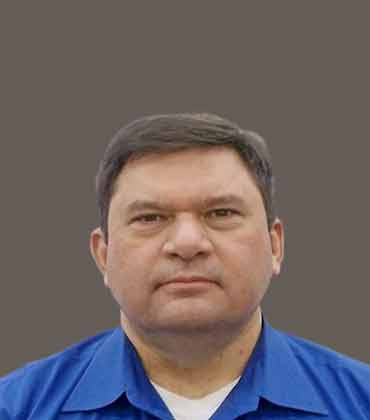
Corrosion Control in Manufacturing
Drew Hevle, Manager of Corrosion Control, Kinder Morgan
Industrial Coating

Motivating and Challenging Technical Professionals in a Manufacturing Environment
Scott Marcus, Process Engineering Manager, Flex-N-Gate
Manufacturing Consulting

How Generative AI is Transforming Supply Chain and Inventory Management
Hao Dinh, Vice President of Technology, Enpro
Industrial Engineering

Reimagining the Future of Manufacturing
Davey L. Ortiz, Multiple Site Manufacturing and Facilities Leader, Cirkul
Contract Manufacturing

Building Specialized Silicon at Industrial Volume
Danny Kohanek, SVP of Manufacturing, SUMCO [TYO: 3436]
IN MY OPINION
CNC Machining
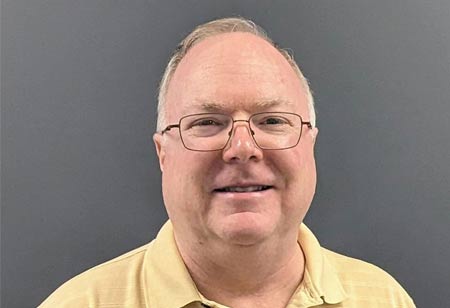
Decarbonizing the Industrial Sector Through Natural Refrigerant Heat Pumps
Wayne Borrowman, Director, Research and Development, CIMCO Refrigeration Inc

LAST WORD
Wires and Cables
Going Green: The Benefits and Challenges of Paperless Manufacturing Systems
Jose I. Perez Alvarado, Director of Operations and Industrial Engineering, PFC. Toronto, OSI Systems
IN FOCUS

EDITORIAL
Building Resilient Manufacturing Operations
Manufacturing in Canada has long operated in an environment where operational reliability, energy efficiency, and workforce capability are decisive competitive factors. In this edition of Manufacturing Outlook Canada, we explore how manufacturers are strengthening operational resilience while continuing to adapt to evolving sustainability targets and talent challenges.
Our cover story features Extreme Industrial Maintenance Inc. (EIMI), recognized as the Top Industrial Equipment Maintenance Services in Canada 2026. Based in Calgary, EIMI has built its reputation around a simple operational principle: when production stops, response time and technical competence matter more than anything else.
Through its 24/7 emergency response capabilities and structured preventive maintenance programs, the company helps industrial clients minimize unplanned downtime while maintaining equipment reliability across demanding operating environments. By identifying issues early, supporting planned servicing and maintaining transparent service practices, the company has become a trusted operational partner for manufacturers that cannot afford production interruptions.
This issue also features valuable perspectives from industry leaders addressing two critical challenges shaping modern manufacturing. Scott Marcus, Process Engineering Manager at Flex-N-Gate, explores the leadership responsibilities involved in motivating and retaining technical professionals in a competitive talent environment. His insights emphasize respect, engagement and continuous challenge as key factors in maintaining a strong engineering workforce.
Complementing this workforce perspective, Wayne Borrowman, Director of Research and Development at CIMCO Refrigeration, examines the role of natural refrigerant heat pumps in industrial decarbonization. His analysis highlights how repurposing waste heat and transitioning away from fossil fuel-based systems can significantly reduce emissions while improving long-term operational efficiency.
Together, these perspectives underscore a central theme: the future of manufacturing depends on operational discipline, technical leadership and strategic innovation. We invite readers to explore the insights in this edition and discover how industry leaders are strengthening the foundations of modern manufacturing.
