
Weekly Brief
Be first to read the latest tech news, Industry Leader's Insights, and CIO interviews of medium and large enterprises exclusively from The Manufacturing Outlook
The Manufacturing Outlook: Specials Magazine
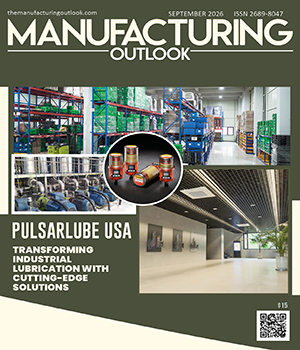
A plant supervisor was sitting relaxed in his office. Being in charge of a floor full of heavy machinery, one would think a bit more concern is warranted, and generally, they’d be right. The supervisor is carefree because they’ve eliminated the most prolific cause of bearing failure — lubrication issues, which can either be from using too much, too little or nothing at all. The plant had Pulsarlube automatic lubricators installed on all of its machinery. While the market has other offerings, they trust Pulsarlube USA’s mechanical lubricators, which generate enough output pressure to reach 20 feet, which is unparalleled in the industry. Knowing that every nook and cranny of a machine is well lubricated, automatically, on time, and with precise amounts gives the supervisor and many like them peace of mind and allows them to relax. Pulsarlube USA leads the industrial machinery sector by providing innovative automatic lubricators. It provides world-class automatic lubrication solutions that enhance efficiency and minimize client risk and downtime by addressing common machinery issues like bearing failure. This ultimately leads to significant cost reductions through reduced maintenance downtime. Pulsarlube stands out among its competitors with its patented 8-bit microprocessor in its devices, which ensures precise lubrication at optimal intervals without the risk of contamination or over-lubrication. Providing Solutions to Industry Challenges Before launching Pulsarlube lubricators, the founders conducted a detailed analysis of their competitors to identify potential avenues for improvement.
CNC Machining
Xtreme Fabrication
Agility Meets Expertise in Metal Fabrication
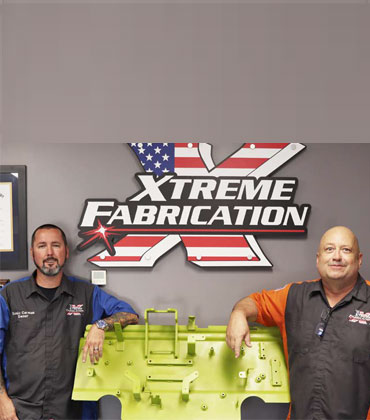
Sonic Carman, Vice-President;Dwight A. Busche, Jr., President
Xtreme Fabrication combines a small business’s agility with an industry giant’s capabilities, earning its reputation in Kentucky’s metalworking industry. Specialized in complex weldments and non-complex machining its suite of services is designed to holistically address clients’ needs with quality and precision. “We see ourselves as the little big company, and this balance allows us to meet our clients’ needs with care and reliability,” says Dwight A. Busche, Jr., president.
Reusable Plastic Container Manufacturer

Why do reusable containers function as engineered components in highly automated manufacturing systems? In modern factories and warehouses, reusable plastic containers do more than hold products. In highly automated environments, they function as engineered components within the system itself. A bin, for example, is filled with components, picked up by a robotic arm, placed onto a conveyor and transported through sorting. It is then stacked in an automated storage system, where another robot may later retrieve it to begin the cycle again. The container moves continuously through equipment designed for precision and speed. When containers are even slightly off in size or shape, automation can falter. Robotic handling may misalign. Conveyors may jam. Operators may be forced to pause systems to recalibrate or intervene. What appears to be a simple storage unit becomes a variable that disrupts throughput. Georg Utz designs and manufactures reusable plastic containers for these highly automated, high-throughput industrial applications, where dimensional stability and repeatable performance are non-negotiable. “We approach reusable plastic container manufacturing through a customer-and application-centric lens,” says Hugo Ramos, VP of sales and marketing. “That means products are developed not only to withstand load, but to maintain consistent performance inside high-throughput systems over years of operation.” Each project begins with a detailed understanding of the customer’s process and its requirements, system interfaces, expected cycle frequency and long-term operational objectives. Containers are designed around how they will perform inside real workflows, so they evolve with automation from the outset rather than adapting to it later.
Industrial Supplier and Distributor

Evolving Manufacturing: The Strategic Role of Industrial Fastener Distribution
Blake Ritter, Branded Products Segment Manager, Lincoln Industries
Industrial Automation

Revolutionizing Industrial Cleaning: Innovations in Pressure Wash Technology
Rebekah Headley, Global Product Line Director, Gates Corporation
Industrial Automation

Lean Trends: Navigating Business Requirement Challenges
Juan Carrera, SVP Global Operations and Operational Excellence, Flowserve Corporation [NYSE: FLS]
Industrial Automation

Driving Success In Food Manufacturing Engineering
Fernando Garcia Vidal, VP of Engineering, Monogram Foods
Wire and Cable

Sustainability As A Catalyst For Innovation And Growth
Sarah Kuhnell, Director of Sustainability, Worthington Enterprises [NYSE: WOR]
Industrial Engineering

Reimagining the Future of Manufacturing
Davey L. Ortiz, Multiple Site Manufacturing and Facilities Leader, Cirkul
Wire and Cable

The Good Manufacturing Leader
Mark Hughes, Vice President of Manufacturing, iRhythm Technologies, Inc

IN MY OPINION
Industrial Equipment
How To Make The Most Of Your Process Failure Mode And Effects Analysis
Monte Heisler, Director, Manufacturing Quality, North American Stamping Group

LAST WORD
Contract Packaging
Digitalization in Manufacturing Assembly Lines
Trent Randles, Manufacturing Engineering Manager, BorgWarner Inc.
IN FOCUS

Innovations Driving Smart Manufacturing in Heavy Industry
Heavy industry is transforming smart manufacturing, leveraging IIoT, AI, and Digital Twin technology to enhance efficiency, productivity, and sustainability across production processes.
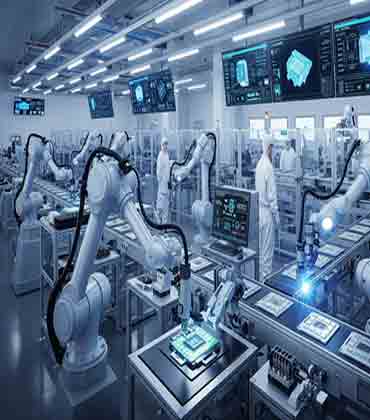
The Evolution of Core Manufacturing Techniques in a Digital Era
Modern manufacturing integrates foam technology, steel stamping, and injection molding, driving innovation and efficiency across various industries through the use of precision and versatile materials.
EDITORIAL
The Finish Line is Moving
Metal surface finishing has outgrown its role as a final step. It’s now a center of innovation, where automation, sustainability and nextgen materials converge. Robotics and AI aren’t supporting tools; they shape precision, consistency and resource efficiency across production lines.
Environmental and regulatory demands have pushed manufacturers past basic compliance. Solvent-free, low-emission coatings are gaining traction for their safety and the performance they unlock. Smart coatings and nanotechnology are raising the bar, adding durability, responsiveness and function in the aerospace and electronics sectors.
Nowhere is this shift more visible than in CNC shot peening. Precision is critical in high-performance applications where surfaces face extreme stress. AI fine-tunes variables like velocity, coverage and media wear, while closed-loop recycling systems reduce waste without compromising quality.
The result is a smarter, leaner and more adaptive finishing process that adds value far beyond appearance.
Manufacturing is poised to expand at a 4.9% CAGR through 2031. That growth signals more than demand. It reflects a redefinition of finishing itself: not as a cosmetic layer, but as a functional foundation for performance, longevity and sustainability.
The finish, in every sense, is where the future begins.
The magazine features a thought leadership piece by Jian Zhou, Ph.D., Corporate R&T Metallurgy Manager at Cummins, who explores advances in engine materials and additive manufacturing to boost performance, efficiency and sustainability in mining and industrial applications. It also includes insights from Greg Thompson, Sr. Director of Operations - CNC at Protolabs, on how combining CNC machining with metal 3D printing creates faster, more flexible and cost-effective pathways for manufacturing complex metal parts.
In this edition featuring the Industrial Caster and Wheel Manufacturer Company, Product Design and Engineering Services Provider, and Custom Metal Fabrication Company, we hope you find the right partner to meet your organization’s needs.
