



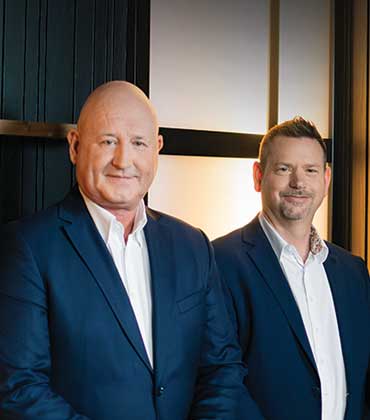
 Martin Raeymakers, President and Boris Hoffarth, Co-owner and CEO
That is where the possibilities of a design brief meet the realities of manufacturing, and where Eurobrillance has positioned its expertise.
“We create material like somebody would tailor your clothes, make it to your measurements,” says Boris Hoffarth, co-owner and CEO.
Hoffarth’s unconventional analogy reveals much about how Eurobrillance works. A tailor begins with the finished result in mind, then works backward through the choices and compromises needed to achieve the right fit. Eurobrillance approaches packaging development in much the same way. It starts with what the customer wants the material to accomplish, then weighs price, lead time, supply-chain risk and technical difficulty while the idea is still taking shape.
Doing that work early also changes the pace of development. Eurobrillance moves quickly from the brief to an industrial trial and, where possible, builds the material through a onestep process so customers can see the final result sooner. Instead of allowing quality issues to surface only after several production stages have added time and cost, the material is tested under real manufacturing conditions while there is still room to adjust it. Customers can see how it behaves, understand where compromises may be required and make a more informed decision about whether the concept is ready for further investment.
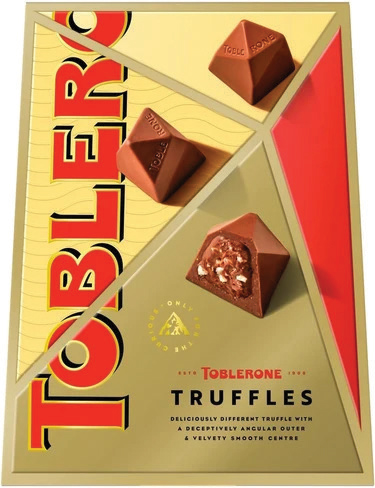 The question, then, becomes much larger than which laminate or finish can create the desired effect. It is about finding the combination that can deliver that effect at an industrial scale, at a viable cost and, where possible, without requiring changes to the customer’s existing production line.
That is where Eurobrillance moves beyond the conventional role of a laminate or finishing supplier. Its value lies in helping customers determine not simply what a packaging concept could look like, but what it will take to make it work in production.
Functionality First, Without Giving Up Visual Impact
Where visual and functional requirements converge, Eurobrillance starts with the non-negotiable performance requirement and engineers the desired finish around it.
For food and industrial applications, that may mean preserving barrier performance, product conservation, handling requirements or material integrity. For luxury, promotional and secondary packaging, brands may define the desired metallic, holographic or registered visual effect, while printers and converters still need a material they can manufacture reliably. The company brings those requirements together when a project demands both, while keeping functionality as the first priority.
It becomes most valuable when a printer or converter needs to deliver a brand’s desired packaging effect while changing the material behind it. Replacing a plastic silver structure with a plastic-free alternative, removing aluminum or moving from a multilayer construction toward duplex or paper-based solutions is not a simple swap. Each change can alter appearance, barrier performance and production behavior. Eurobrillance works through those risks by starting with the outcome the finished package needs to preserve, then rebuilding the laminate or finishing solution so the new structure can deliver the required visual effect, functionality and production reliability.
We create material like somebody would tailor your clothes, make it to your measurements.
It doesn’t ask customers to choose between appearance, functionality and a more sustainable material structure. It works to find the combination that allows all three to coexist with the least possible compromise.
The One-Step Advantage
A material becomes easier to adopt when customers encounter fewer unresolved steps between development and production. Eurobrillance’s one-step approach combines lamination and finishing where technically possible, bringing the material closer to its final usable form before it reaches the customer.
Global regulatory pressure on barrier and functional papers and boards makes speed increasingly important, but Eurobrillance sees a second test: converting an innovation into something ready to use. NatureWorks, the advanced materials company behind the Ingeo™ biopolymer platform, saw that capability when exploring the potential of Ingeo for new laminated and coated paperboard structures under the brand-named CelleShield Protopia™. Eurobrillance brought experience from Paperflex3R®, a range that had generated around 30 barrier-paper solutions in three years.
Eurobrillance and Plastigraf Trevigiana showcased those possibilities at PACK EXPO Chicago. The model reflects the startup-like agility Eurobrillance wants to preserve as it grows. It has tripled in size in two years through innovation while keeping a simple guideline that innovation should be proven and ready to sell.
Engineering Sustainability for Global Use
A more sustainable material only matters if customers can actually use it at scale. For Eurobrillance, that means developing structures that reduce reliance on conventional materials while still fitting the equipment, production speeds and market requirements customers already have to manage.
Production practicality is only one part of the problem. Printers and converters serving brands across multiple countries may also have to work with different sustainability expectations from one market to another. One market may prioritize recyclability, while another may favor compostable packaging or place greater emphasis on reducing specific materials. For a global brand, those differences shape the packaging brief; for the companies producing that packaging, they shape the material that must actually run through production.
-
Its value lies in helping customers determine not simply what a packaging concept could look like, but what it will take to make it work in production.
Eurobrillance brings those questions into development from the beginning. The team considers how the material will be produced, how it will perform and how broadly it can be applied across markets before the solution is finalized. The more technical the package becomes, especially when barrier performance, printability or premium finishes are involved, the more important it is to balance sustainability with the practical conditions that determine whether customers can adopt it.
Independence Creates Room to Move Before the Market
For Eurobrillance, innovation is not only about responding to today’s demand. It is also about preparing for what customers may need next. It’s possible because the company has room to make development decisions without being tied to a short return cycle. With two owners and no private equity participation, Boris says profits are reinvested into the business, allowing Eurobrillance to support technologies that may not deliver immediate volume but could become relevant as packaging requirements change.
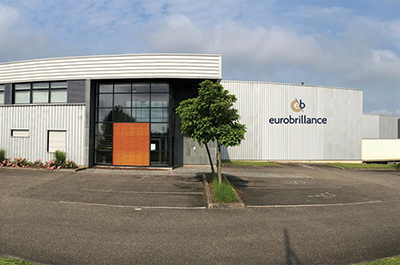 His view of where packaging should go gives Eurobrillance a reason to work ahead of immediate demand. Some developments may reach technical readiness before customers are prepared to adopt them, but the company treats that gap as part of building new materials. It studies how brand requirements are evolving and what those changes will eventually require from printers, converters and box makers, then decides whether to begin developing the answer before demand becomes explicit.
Independence becomes part of the company’s innovation model. A longer horizon gives Eurobrillance room to experiment, industrialize new ideas and keep capabilities ready until customers have a clear use for them. When market expectations shift, customers are not starting from zero; in some cases, the technical groundwork is already in place.
Giving the Factory Floor a Voice
The people closest to the machines often see the problems, adjustments and opportunities before anyone else does. Eurobrillance builds on that reality through what Hoffarth describes as a “liberated company” philosophy, giving the factory floor a direct role in improving production. Their practical knowledge helps Eurobrillance turn small observations into useful adjustments, making it easier to refine production as new materials move from development into industrial use.
Eurobrillance reinforces this culture by making shared success tangible. Its profit-sharing model gives employees the same amount regardless of position, turning company performance into a collective outcome rather than a reward reserved for senior roles. The structure strengthens the link between shop-floor involvement and business results, encouraging the people who spot production issues, suggest improvements and help industrialize new materials to see themselves as active contributors to Eurobrillance’s progress.
Moving Closer to the U.S. Market
Years of investment in new materials are now giving Eurobrillance a wider commercial reach. Its U.S. expansion also reflects the shared vision Hoffarth and President Martin Raeymakers brought when they took over Eurobrillance nine years ago. Both had experience in the U.S. market, while Raeymakers had led a North American manufacturing plant that was a market leader in metallized paper. Drawing on their experience, they envisioned global expansion from the outset, with the U.S. as their first step.
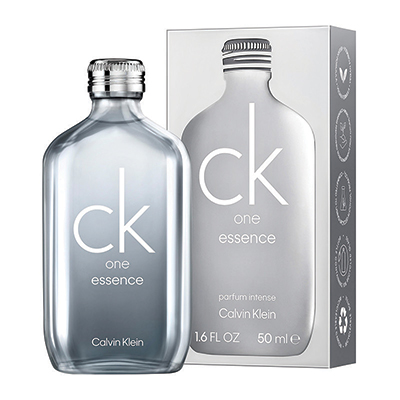 Eurobrillance USA will take that strategy further by offering local U.S. stock for food applications serving the thermoformingtray and lidding markets and transfer for FMCG and Beauty applications. The move will help larger brands and converters respond faster while working with a partner capable of supporting development across a global footprint.
Hoffarth wants Eurobrillance to become the company customers know to call when a packaging requirement demands a genuinely disruptive material solution. For U.S. box makers, printers and converters, the value remains practical: new functionality, stronger visual effects and more sustainable structures without separating material innovation from the realities of industrial production.
It’s this combination of material innovation, industrial execution and production practicality that underpins Eurobrillance’s recognition as Top Laminated and Finishing Printing for Box Making Industry 2026 by Manufacturing Outlook.
