




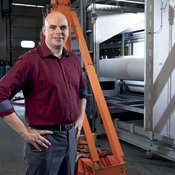
 Jody Paulus, CEO
The technology provides a way to coat nanomaterials used in everyday products and can also be used to coat a bulkier material with an extremely thin layer coating. This enables the properties of a coating to be attained without impacting the topography of the surface, contrasting conventional thicker coatings. For a company, handling or managing perilous substances comes with increased costs for the treatment and disposal of hazardous waste, maintenance of worker safety, and stringent management of EU regulation for waste disposal.
This is where companies like Europlasma are moving the needle.
With over 25 years of experience in plasma technology, Europlasma empowers its clients to achieve the highest performance and protection for their products, with a production process that has a minimal environmental footprint. With innovation at its core, Europlasma pioneered the first roll-to-roll plasma machine in 1994 and the first industrial nanocoating machine in 1996. It has been at the front line of plasma technology ever since, with its patented nanocoating technology platform Nanofics and PlasmaGuard, enabling OEMs and manufacturers to apply liquid-repellent or other functional ultra-thin coatings on intricate three-dimensional shapes as well as rolls. “Our Plasma Enhanced Chemical Vapour Deposition (PECVD) technology replaces wet coating processes which are often harmful to the environment and require far more energy than plasma nanocoating,” states Jody Paulus, CEO of Europlasma. The company has been able to optimise this process to an industrial scale, unmatched in the industry. Europlasma masters a wide scale of production machines, with plasma chambers from 50 to 2000 litres. Moreover, great uniformity is combined with the shortest cycle times in the industry, and the machines can be flexibly integrated into the production process.
As Europlasma is entirely vertically integrated, they design and produce all of the machines, technologies, chemicals and application in-house in the headquarters in Belgium. Europlasma is also second to none in its capability of applying nanocoating both on a 3D object as well as on rolls of textiles by winding and unwinding the textile through its patented electrode design. Additionally, the company has successfully industrialised this technology for roll widths from 0.5 meters to 2.5 meters.
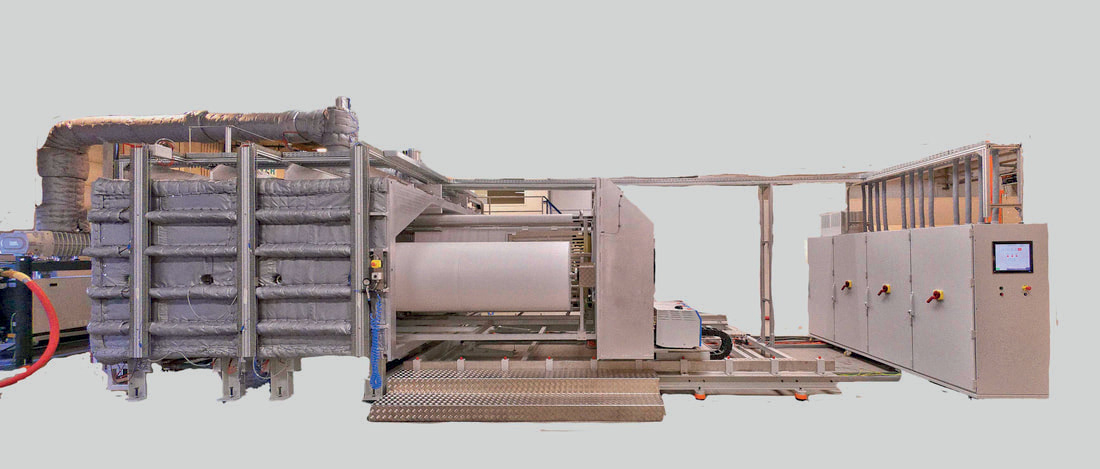 This demands a profound knowledge of plasma technology, process chemistry, material sciences and vacuum equipment design.
 Our Plasma Enhanced Chemical Vapour Deposition (PECVD) technology replaces wet coating processes which are often harmful to the environment and require far more energy than plasma nano-coating
This technology is not limited to any particular industrial sector, as it can be used in wearables and electronics, medical, filtration and nanowovens, and many more. When it comes to wearables and electronics, ultra-thin coatings add permanent water repellent and oil-repellent properties to the coated surface without changing colour and affecting the performance of the device. Europlasma has now introduced PlasmaGuard, the first PECVD 100 per cent halogen-free conformal coating. However, PlasmaGuard E is also an even stronger barrier coating, outperforming not only other nanocoating barriers commercially available but also other types of conformal coating like acrylic, epoxy, silicone or even parylene. Besides, with the help of the Europlasma PECVD process, it is possible to finely clean medical plastics and metals used in stents, implants and contact lenses, as the application guarantees a clean and cost-effective overall process. For medical coating, the company specialises in two types of coatings, one is hydrophilic coatings, and the other is hydrophobic coatings. Most filters clean the air, water, and gas by passing them through a filter media that removes particles like dirt and dust effectively acting as a sieve to capture particles in the filter media as air flows through it. In order to reach the higher filtration levels needed to filter smaller particles, high levels of oil repellence (oleophobicity) and water repellence (hydrophobicity) are needed. Through its proprietary PECVD technology, Europlasma is able to address all types of nonwovens to make them very hydro and oleophobic. In filtration media, the Europlasma nanocoating increases oleophobicity and hydrophobicity without affecting the material’s properties. Crucially this allows for a much higher filter efficiency using less fabric and combined with the nanometer thickness resulting in industry-leading filter efficiencies without affecting the pressure drop at all.
For the future, the company is going to broaden its horizon, and also try to bring in more new technologies as regards to coating in order to take the leading edge in the industry.
