

Weekly Brief
Be first to read the latest tech news, Industry Leader's Insights, and CIO interviews of medium and large enterprises exclusively from The Manufacturing Outlook
A featured contribution from Leadership Perspectives: a curated forum reserved for leaders nominated by our subscribers and vetted by our Manufacturing Outlook Advisory Board.

The Manufacturing Outlook
An Overview of Industrial Forging
Willis smith
Appropriate software for parameterization and an extensive choice of accessories for pyrometers is essential.
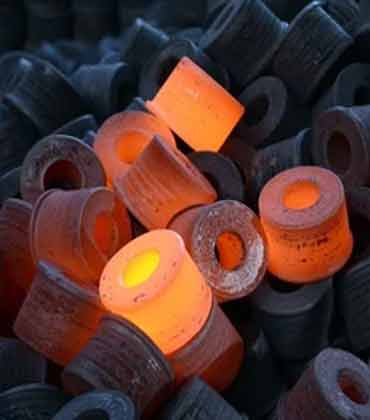
Temperature measurement during the forging of metals is crucial, including steel, iron, and alloys. Mainly metal components for shipbuilding, automobile, aircraft, mechanical engineering, and plant construction get manufactured in forging. During hot forging, the correct shape temperature of steel, iron, and alloys get determined through non-contact temperature measurement. The type of impact and compression applied to a metal depends on its composition. Before forging, heavier metals must be heat-treated, whereas aluminum, brass, and copper can get cold-forged.
If the procedure is hot or cold, the forging process will entail using force with a hammer, mold, or heavy weight; this is the essence of the forging process. Air purge gets utilized to maintain the optics of pyrometers clean, and cooling housings offer for use in environments with high ambient temperatures. It permits the change of all parameters, allowing for optimal process adaption and digital evaluation of measured results. Minimal maintenance mounting brackets get utilized for exact alignment and stable attachment.
Optimal forging temperature is a significant quality component: Because the temperature of the workpiece before forging is one of the essential characteristics and critical for the quality in manufacturing a considerable number of safety-related features, it is a prerequisite forging. The temperature ranges between 950 °C and 1250 °C, depending on the material and method. The blanks are preheated in gas-fired or induction-heated furnaces; standard thermocouples cannot get used to measure them directly. Also inapplicable to inductively heated furnaces is thermocouple measuring.
Pyrometers monitor temperature non-contact: Pyrometers replace conventional thermoelements for temperature measuring without contact. It is vital to use pyrometers at the furnace's exit to ensure that the workpieces are at the correct forging temperature before they get placed in the forging press. As the parts are constantly in motion, these pyrometers must have a quick response time, small spot sizes, and a peak picker. Only combining these three characteristics enables an exact measurement, even if the surface of the work item gets scaled.
Forging temperature quickly: Rapid non-contact measurement of forging temperature at the furnace outflow using DIAS pyrometers. The pyrometer can identify the accurate material temperature in the tiniest scale scratches and save the information in the peak picker. The rapid measurement permits the control of a separator to reject too hot or underly cold forgings and the recording of each forging. For precise pyrometer alignment, LED or laser targeting lights, viewfinders, and video modules.
The articles from these contributors are based on their personal expertise and viewpoints, and do not necessarily reflect the opinions of their employers or affiliated organizations.
