
Weekly Brief
Be first to read the latest tech news, Industry Leader's Insights, and CIO interviews of medium and large enterprises exclusively from The Manufacturing Outlook
A featured contribution from Leadership Perspectives: a curated forum reserved for leaders nominated by our subscribers and vetted by our Manufacturing Outlook Advisory Board.

Interface
The Human Side of Lean Transformation
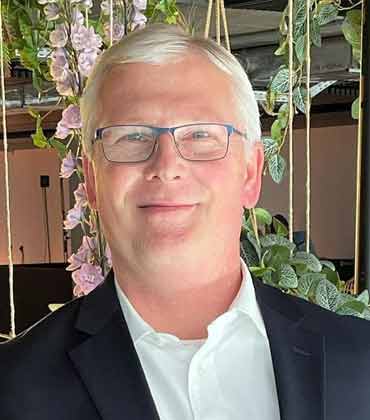
Billy Ingram
Billy Ingram, Director of Lean Product and Process Development at Interface, leads initiatives that enhance operational performance, innovation, and organizational alignment. With deep expertise in Lean principles and continuous improvement, he focuses on creating sustainable systems that connect people, processes, and long-term business success.
Lessons from Lean Transformation
My approach to lean product and process development has evolved from viewing Lean primarily as a system for eliminating waste and improving efficiency to understanding it as a broader framework that enables alignment, innovation, and long-term organizational performance. Early in my manufacturing career, my focus was heavily centered on the traditional operational side of Lean—cycle time reduction, process flow, standardization, downtime reduction, and measurable efficiency gains. Those principles remain extremely valuable, but over time, I have come to recognize that many organizations already have strong technical systems yet still struggle to fully realize the outcomes they are pursuing.
What I observed repeatedly was that operational challenges are often not caused by a lack of tools or technical capability. More often, they stem from misalignment between stakeholders, resistance to change, competing priorities, or an incomplete understanding of how decisions affect people, culture, and longterm sustainability. That realization significantly changed how I approach improvement and innovation today.
My perspective evolved into what I now describe as responsible innovation and aligned performance. I began focusing not only on how to improve systems technically, but also on how to improve the conditions that allow innovation and continuous improvement to thrive. This includes understanding workforce engagement, organizational culture, leadership behavior, stakeholder perceptions, and the relationships among economic, environmental, and social considerations. In practice, I have found that organizations generate better ideas—and implement them more successfully—when these factors are aligned intentionally rather than treated separately.
Efficiency in a Changing Industry
One of the biggest challenges manufacturers face today is balancing efficiency, workforce realities, and innovation simultaneously. Most manufacturers are under constant pressure to improve productivity, reduce costs, and remain competitive while also adapting to labor shortages, rapid technological change, supply chain instability, and increasing stakeholder expectations. Many organizations also face pressure to modernize operations while preserving reliability and maintaining production targets. These competing demands often create environments where teams become risk-averse or overly focused on short-term operational metrics.
Another challenge is that innovation is frequently treated as something separate from daily operations. In many cases, organizations have capable people and improvement systems in place, but ideas struggle to gain traction due to insufficient alignment on priorities, communication, or implementation strategy. Manufacturers can unintentionally create friction by focusing exclusively on efficiency metrics while overlooking the human and cultural factors that influence execution. Sustainable operational improvement requires both strong systems and an environment in which employees understand the purpose of improvement efforts and feel empowered to contribute meaningfully.
Creating a Culture of Improvement
Leadership plays a critical role in building that type of culture. In my experience, continuous improvement cultures are not created solely through tools, programs, or initiatives. They are shaped by leadership behavior, consistency, and the degree of trust leaders establish within the organization. Employees pay close attention to what leadership rewards, tolerates, and prioritizes. If leaders encourage participation but dismiss ideas, people disengage quickly. If leaders create clarity around mission, values, and expectations while demonstrating openness to learning and collaboration, improvement efforts become far more sustainable.
“Operational challenges are often not caused by a lack of tools or technical capability.”
Strong leadership also helps organizations navigate resistance to change. Every improvement initiative affects people differently, and successful leaders understand that operational transformation is not just technical; it is human. Leaders who communicate effectively align teams around shared goals. They also create psychological ownership of improvement efforts. These actions build more resilient organizations. They create environments where continuous improvement becomes part of daily behavior rather than a temporary initiative.
Lean Manufacturing’s Next Chapter
Looking ahead, I believe Lean practices will continue shaping the future of manufacturing, but their role will expand beyond traditional efficiency models. Modern manufacturing environments are becoming increasingly complex, interconnected, and datadriven. Lean principles such as waste reduction, standardization, visual management, and continuous improvement will remain foundational, but organizations will need to apply them with greater emphasis on adaptability, workforce engagement, and decision-making alignment.
I also believe the future of Lean will involve stronger integration of operational performance with broader organizational responsibility. Manufacturers that can align productivity, workforce contribution, innovation, and long-term sustainability will outperform organizations that focus only on short-term optimization. Organizations that thrive will be capable of improving processes while also improving alignment across teams, stakeholders, and strategic objectives.
Leading Operational Transformation Successfully
For emerging manufacturing professionals, my advice is to develop both technical capability and perspective. Learn Lean systems, process improvement methods, and operational fundamentals thoroughly, but also learn how organizations function beyond the process itself. Understand people, communication, leadership, and stakeholder dynamics. Many operational challenges are ultimately human challenges disguised as technical problems.
I would also encourage young professionals to stay curious and avoid becoming locked in a single way of thinking. Some of the most valuable improvements come from expanding perspective and questioning assumptions rather than simply applying existing tools repeatedly. Finally, focus on creating practical value. The goal is not just to generate ideas, it is to create solutions that people can align around, implement successfully, and sustain over time.
The articles from these contributors are based on their personal expertise and viewpoints, and do not necessarily reflect the opinions of their employers or affiliated organizations.
