

Weekly Brief
Be first to read the latest tech news, Industry Leader's Insights, and CIO interviews of medium and large enterprises exclusively from The Manufacturing Outlook
A featured contribution from Leadership Perspectives: a curated forum reserved for leaders nominated by our subscribers and vetted by our Manufacturing Outlook Advisory Board.

The UPSIDE Group Inc. dba UPSIDE Foods
Pioneering Scale: Engineering the Future of Biomanufacturing and Cellular Agriculture
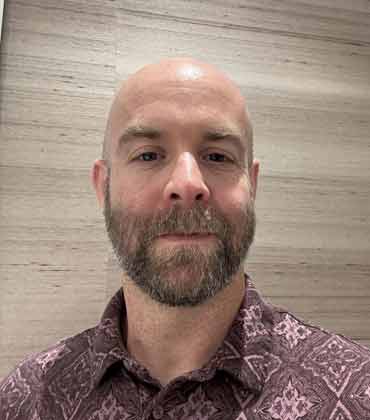
Bryce Sullivan
Bridging the Gap from Benchtop to Commercial Scale
My experience in biomanufacturing has reinforced that scaling biological processes is rarely a simple, linear translation of bioprocess kinetics. It is an exercise in mastering fluid dynamics, capital efficiency and mass transfer across fundamentally different biological platforms. Armed with a background in Biochemical Engineering from UC Davis, my career has been defined by bridging the critical gap between bench-scale research and full-scale commercial manufacturing. Over the last decade, I have led and executed process scale-ups ranging from 2-liter laboratory reactors to massive 200,000-liter industrial systems.
What has shaped my engineering perspective most profoundly is cross-platform versatility. Rather than specializing in a single host organism, I have driven process development across bacteria and plant extracts at Marrone Bio Innovations, algae at Solazyme/TerraVia and yeast platforms at Amyris and Impossible Foods. Today, at UPSIDE Foods, I am applying those industrial biotechnology principles to the cutting-edge frontier of cultivated meat, scaling delicate avian and mammalian cell systems. Bridging classic industrial biotech with cellular agriculture requires balancing the rugged, high-density growth of microbial hosts with the shear-sensitive, complex requirements of animal cell cultivation.
Driving Efficiency through Infrastructure and Continuous Operations
My hands-on execution spans every stage of facility maturity. Early in process development, I have personally designed equipment, standalone process skids and entire pilot facilities - a competency honed deeply during my time leading pilot engineering at Impossible Foods. At commercial scales, I serve as a Subject Matter Expert (SME), ensuring that early-stage process engineering seamlessly translates into robust, multi-million-dollar production assets. My technical depth centers heavily on Downstream Processing (DSP), encompassing cell separation, solids and liquid handling, fluid transport, filtration, purification and wastewater management. While single-use systems have niche applications, my focus remains anchored in multi-use stainless steel infrastructure built for high-throughput operation. By prioritizing continuous modalities over traditional batch processing, I have consistently unlocked major unit-cost reductions and throughput efficiency gains. Translating these designs into reality requires rigorous capital execution, leading OEM negotiations, directing stage-gate design approvals and leading Factory Acceptance Testing (FAT) and Site Acceptance Testing (SAT) to ensure equipment performs under real-world conditions.
"The ultimate challenge lies in designing automated, continuous and highly reliable processing systems that drive down unit costs without sacrificing product quality."
Milestones in Commercialization and Yield Optimization
Throughout my career, I have had the privilege of contributing to several first-of-their-kind commercial milestones. At Solazyme (TerraVia), I contributed to the development and commercial launch of diverse algal product lines, including Thrive high-smoke point cooking oil, DHA-rich animal feed additives and industrial drilling lubricants (co-authoring peer-reviewed research on encapsulated oil applications in tunneling).
As biomanufacturing expands into novel food platforms, the ultimate challenge remains economic scalability without ever sacrificing safety or product quality.
At Amyris, I was a key technical contributor in bringing the RebM zero-calorie sweetener process to commercial scale at the joint DSM-Amyris Brotas, Brazil facility and third-party purification sites, achieving a record-fast market entry with industry-leading purity. Later, at Impossible Foods, I helped engineer the scale-up of soy leghemoglobin into highly reliable, large-scale production, drastically improving process robustness and unit yield while driving down overall Cost of Goods Sold (COGS).
Aligning Engineering, Quality and Cross-Functional Teams
Process engineering is the vital connective tissue between R&D innovation and routine commercial manufacturing. At UPSIDE Foods, I lead a team of process engineers tasked with establishing the scale-up pathways for novel cell products - an unprecedented frontier in commercial biomanufacturing.
Building at this frontier means operating at the intersection of engineering, quality, regulatory strategy and intellectual property. Beyond managing CapEx budgets and team deliverables, I frequently draft and review technical responses for regulatory dossiers and governmental filings, helping establish regulatory precedents for novel food technologies. My work actively bridges R&D bench scientists, supply chain leaders and shop-floor manufacturing operators to ensure technology transfers are both seamlessly executed and strictly compliant.
Advice for Aspiring Bioprocess Professionals
First, embrace cross-platform adaptability. The biomanufacturing landscape is evolving rapidly and the ability to apply engineering fundamentals across different biological systems and operational scales is invaluable.
Second, relentlessly pursue economic scalability. Designing an elegant process at the bench is only the first step, the ultimate challenge lies in designing automated, continuous and highly reliable processing systems that drive down unit costs without sacrificing product quality. Finally, recognize that engineering does not happen in a vacuum. Success in this field relies heavily on your ability to collaborate across quality, regulatory and supply chain functions. Technical expertise allows you to design the system, but cross-functional leadership is what actually gets the facility built and the product to market.
The articles from these contributors are based on their personal expertise and viewpoints, and do not necessarily reflect the opinions of their employers or affiliated organizations.
