

Weekly Brief
Be first to read the latest tech news, Industry Leader's Insights, and CIO interviews of medium and large enterprises exclusively from The Manufacturing Outlook
A featured contribution from Leadership Perspectives: a curated forum reserved for leaders nominated by our subscribers and vetted by our Manufacturing Outlook Advisory Board.

Westlake Pipe & Fittings
Working Through People to Optimize Performance
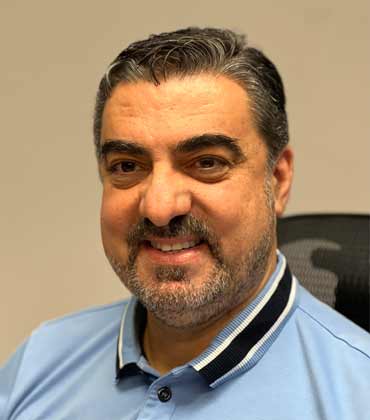
Fadi Safieddine
I have been working in manufacturing for over 30 years, with the majority of that time spent in maintenance. Most of my experience comes from the automotive industry, having worked with major manufacturers. I have also worked with Tier 1 suppliers and, most recently, transitioned to a nonautomotive manufacturer to gain experience in injection molding.
I take pride in having built a well-rounded career by working across various departments, including Body-in-White, Assembly, production, and maintenance, in both automotive and non-automotive environments. These diverse experiences have provided me with a wealth of industry knowledge.
Despite the differences across manufacturers, whether in size, products, or technology, effective maintenance programs share a common foundation. That foundation is the team, supported by clear performance indicators, proactive maintenance activities, and strong root cause analysis that drives continuous improvement.
At the core of any successful maintenance program is a people-first approach. While our goal is to preserve machinery, maintenance is ultimately a people business. Maintenance teams are the backbone of operations. Although this may seem obvious, it is often overlooked. Many organizations focus heavily on production and invest in technology such as software for scheduled maintenance, thermography, or vibration analysis, while paying little attention to the people who operate these systems.
Some companies promote individuals with strong technical skills and consider that an investment in the team. While this might create short-term results, it often underutilizes the rest of the team, reduces cohesion, and undermines long-term performance. A “one-person team” approach can lead to knowledge silos, low morale, missed opportunities for growth, and increased downtime.
In contrast, investing in the full team leads to collaboration, shared learning, and better outcomes. When everyone contributes to root cause analysis and implements effective countermeasures, machine availability improves and breakdowns decrease. In collaborative maintenance, the number one priority is investing in the team.
Collaborative Maintenance Works with Delegation and Accountability
Members of the maintenance team range from individuals across the experience spectrum and their talents vary depending on the situation. By applying the Situational Leadership model, developed by Dr. Paul Hersey, delegation can be utilized as a tool to empower individuals and enhance their task-related development. According to this model, each employee falls into one of four categories:
• Inexperienced and insecure: These employees need clear, detailed guidance to build confidence and reduce the chance of mistakes.
• Inexperienced but confident: Their enthusiasm should be encouraged. Take time to explain the reasoning behind how tasks are done to help build both skill and understanding.
• Experienced but insecure: Offer regular positive feedback and encouragement to strengthen their motivation and selfassurance.
• Experienced and confident: These employees are ready for full delegation. Give them space to apply their skills, which frees leaders to focus on higher-level priorities.
“In collaborative maintenance, the number one priority is investing in the team.”
The goal is to help every employee reach the stage of being experienced and confident. Once the team is there, leaders can delegate effectively and shift focus to strategic tasks like maintenance planning, predictive maintenance, addressing chronic issues, and reducing micro stops.
Delegation, however, must come with accountability. Without clear expectations, delegation becomes simple task dumping. Expectations should be aligned with maintenance KPIs such as the number and duration of breakdowns (Mean Time to Repair or MTTR), the frequency of failures (Mean Time Between Failures or MTBF) and adherence to maintenance schedules. Other areas include identifying root causes and implementing lasting solutions.
Benefits of Collaboration Maintenance
One major benefit of Collaboration maintenance is employee retention. Retaining talent or attracting new talent to your workplace is becoming a huge challenge in the industry. Building a good foundation based on teamwork, respect, sharing information will help retain the talent. Earning the reputation as a good place to work will further attract new talent. The value of a stable, high-performing workforce cannot be overstated.
Another benefit for good Collaboration maintenance is the improvement of the mean time to repair. During a breakdown, a motivated team will act swiftly and efficiently. On the other hand, a team with low morale and high turnover may hesitate or require constant direction, turning minor issues into major problems. A motivated team also proactively prevents breakdowns increasing meantime between failures. Often, it is the little things like hearing the usual noise, spotting a leak, or feeling excessive heat that can catch a failure before it happens. Engaged employees notice and act on these signs.
Ultimately, investing in your maintenance team pay off. While some view maintenance as an expense, it is actually a driver of profitability. When machine availability improves, the perceived cost of maintenance becomes negligible, and the savings become sustainable.
Collaborating maintenance puts people first. By building and leading a strong team, you create a culture where the team leads the program and drives it towards zero breakdown.
The articles from these contributors are based on their personal expertise and viewpoints, and do not necessarily reflect the opinions of their employers or affiliated organizations.
