
Weekly Brief
Be first to read the latest tech news, Industry Leader's Insights, and CIO interviews of medium and large enterprises exclusively from The Manufacturing Outlook
A featured contribution from Leadership Perspectives: a curated forum reserved for leaders nominated by our subscribers and vetted by our Manufacturing Outlook Advisory Board.

Cirkul
Reimagining the Future of Manufacturing
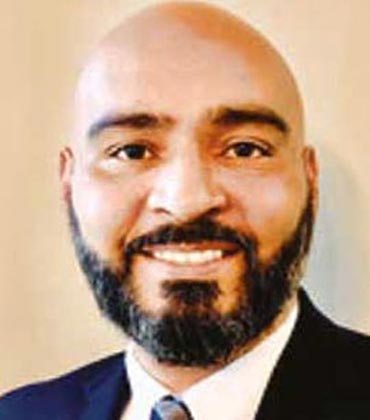
Davey L.Ortiz
Davey L. Ortiz is the senior maintenance manager at Cirkul. He has two decades of experience in medical device manufacturing, food and drug, automotive and industrial material processing industries. He specializes in machine design and fabrication, streamlining production processes, organizational management, site start-up strategies and expansions and contract negotiations. Ortiz aims to empower individuals to navigate current and future manufacturing industry roles.
In an interview with Manufacturing Outlook, Ortiz shared insights on his career trajectory, his hands-on approach to leadership and his work addressing workforce competency in the manufacturing industry.
Learning the Skills of the Trade
I started my career as a maintenance mechanic in the automotive industry, where I used traditional tools to troubleshoot and gained essential skills. I then explored a variety of fields in organizations like 3M and Ball Corporation, mastering the technical knowledge and expertise necessary to perform tasks efficiently and effectively.
I joined Abbott’s medical device manufacturing facility and eventually dived into facilities maintenance, manufacturing and industrial maintenance practices. During this period, Abbott was actively acquiring smaller companies, and I was responsible for commissioning sites and overseeing the processes, ensuring efficiency. I mastered core business functions, driving overall operational coherence.
Later, a recruiter from Tesla approached me about overseeing their 16.2 million-square-foot Gigafactory project in Nevada. I gained experience in leading construction and expansion projects while administering the maintenance team.
A Pathway to New Opportunities
As my tenure ended, I moved to the East Coast, where I was introduced to Garrett Wagoner, CEO, and Andy Gay, co-founder of Cirkul. Their vision was to create a product that would help people, nurture businesses and help the team grow. This inspired me to work for the company, and it's been over four years now.
Since then, we have grown from a 15,000-square-foot facility to over six facilities, including one in Utah, averaging nearly a million square feet in total. We've expanded with our customers and investors in mind, while keeping our eyes on the ball every step of the way.
Cutting Costs through Self-Performing Teams
There was a time when outsourcing parts and services from countries like China, India, and Europe was seamless. However, due to political tensions, the trade landscape has drastically changed.
I have had equipment that required critical spare parts to be outsourced from Spain. These parts would usually take six to nine weeks to be shipped, with a minimal fee. But now it takes 10 to 12 weeks, with a substantial increase in shipping costs, with government fees accounting for 10 percent of the overall cost. There was a dire need to implement cost-saving strategies.
"Automation has been a cornerstone of manufacturing for decades and has rapidly evolved in recent times. However, certain aspects must be analyzed before implementing it in your manufacturing facility."
We sourced individuals skilled in fabrication and built an internal self-perform team, where we fabricate parts that we previously outsourced, with locally sourced raw materials. The turnaround was quicker and the cost was lower, justifying the extra overhead.
Building the Manufacturing Workforce of Tomorrow
There’s a lot of competition for skilled laborers within the U.S., but there’s been a significant decline in the number of individuals looking to get into trade occupations. University freshmen are trying to excel in executive and backend jobs, leaving a significant gap in critical skills and resources necessary for the manufacturing industry.
It was challenging to source experienced individuals adept at handling equipment with instrumentation, electrical, mechanical and electromechanical controls for Cirkuls’ manufacturing facility in Utah.
To bridge the gap within the industry, we launched an internal training program. I identify system matter experts and assign them the responsibility of training freshmen. If a technician excels in electrics and controls of the operations but lacks mechanical skills, I pair him with a skilled mechanic who lacks electrical skills. That way, they can help each other grow.
I have created a five-tier leveling program, with tier one being the beginner level. Individuals aware of the basic concepts and the tools are put on the shop floor to carry out responsibilities designated to that level. As they advance to higher levels, they are expected to bridge gaps, operate effectively, maintain advanced machines and drive improvement plans from start to end.
My responsibility as a leader is to ensure they stay within the boundaries and do their job safely. At the end of the day, it’s all about adding value to the company.
Accelerating Workforce with Automation and AI
Automation has been a cornerstone of manufacturing for decades and has rapidly evolved in recent times. However, certain aspects must be analyzed before implementing it in your manufacturing facility.
Automation can transform businesses but become a costly trap if applied poorly. Choosing the right systems impacts the success of automation projects. While implementing automation in the facility, I question myself: Is this sustainable? Is this something we can improve on in the future? We ensure in-house resources are compatible with future technologies, limiting the need for outsourced technicians to resolve issues.
AI has transformed our tech-based departmental store. We use AI-integrated computerized maintenance management system programs, which streamline accounting and reporting processes. Yet, we remain cautious while implementing newer technologies.
Ensure to investigate and cross-check AI-generated content. Over-reliance on AI leads to making unethical decisions in critical areas.
Word of Advice for Peers
My recipe for success is to surround yourself with people who are better than you. I learn from my peers and use resources and connections to guide them.
Networking could prove valuable for your professional growth. It helps you build strong relationships that lead to success and growth. It creates a platform for knowledge sharing necessary to gain new insights and expertise, keeping you abreast of the trends and advancements in the industry.
The articles from these contributors are based on their personal expertise and viewpoints, and do not necessarily reflect the opinions of their employers or affiliated organizations.
