





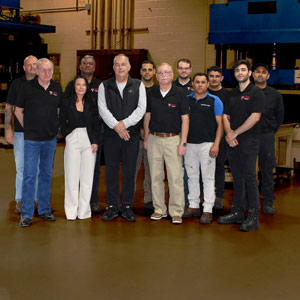
 Doug Valerio, President
At the heart of its product portfolio lies a proprietary, natural rubber formula with low dynamic stiffness (LDS) that is instrumental in preventing transmission of vibrations and noise. The compounds range from 40 to 60 durometers with a maximum dynamic stiffness of 1.3.
“We use bridge-bearing natural rubber, known for its excellent physical properties and low dynamic stiffness, to engineer rigid bearing compounds with low natural frequencies, while achieving exceptional isolation performance,” says Doug Valerio, president of Mason Industries.
Philosophy and Design Approach
Dr. George Wilson, a pioneer of bridge-bearing design and rubber products, influenced Mason Industries’ philosophy and associated practices. Working with him, the firm’s experts identified bridge bearing natural rubber as the most effective isolation material capable of delivering extendedlife spans, when designed and installed correctly.
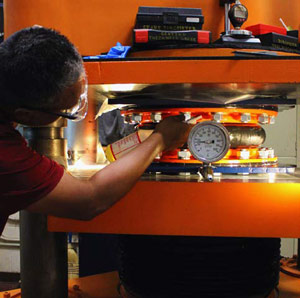
Unlike other suppliers that use low cost fillers resulting in higher durometers and dynamic stiffnesses to manufacture over-stressed smaller bearings, Mason Industries embraces a different approach. It focuses on larger bearings that easily handle loads, isolate noise and vibrations, and reduce the risk of failures. The longevity and performance of these products have allowed the company to offer a 100-year design and performance guarantee.
Engineering Excellence
A commitment to engineering excellence is reflected in Mason Industries’s laboratory testing requirements for testing of creep, load-deflection, and tensile strength, etc.. Adhering to ISO standards, the American Society for Testing and Materials (ASTM), and the American Association of State Highway Transportation Officials (AASHTO), the firm designs isolation bearings well below maximum permissible stress and strain limits while maintaining low natural frequency, easily eliminating random frequencies or resonances post-construction. Dynamic stiffness correction factors of 1.17, 1.28, and 1.30 are maintained below the standard acoustical threshold of 1.4 for optimum performance. The company makes sure that a single natural frequency of support is maintained for the entire structure, preventing the possibility of random frequencies and/or resonances post-construction.

Designs between six and eight hertz natural frequencies mitigate rail(train or subway noise) vibration issues, their expert engineers design bearings that can optimally operate in that frequency window. Since conservative estimates of safety factors often lead to higher-than-specified support frequencies, natural frequency analysis at 80, 100, and 120 percent of service loads areperformed. This helps clients avoid having to retrofit building isolation systems that fail to eliminate disturbing frequencies.
Mason Industries also utilizes shear keys, shear pins, or isolated columns to handle seismic activity, wind loads, and, in some cases, the impact force of a rail car, all while complying with local building codes.
A Collaborative Approach to Building
Isolation Mason Industries staunchly believes that the most critical element of any building isolation project is the relationship between acoustical consultants, structural engineers, builders, and suppliers. Mason Industries’ team holds discussions with all stakeholders to thoroughly understand the specific requirements, concerns and objectives, to ensure delivery of an effective purpose-built isolation bearing.
“Building isolation is straightforward, and working with educated consultants and knowledgeable suppliers gets the job done, and done very well.”
We use bridge-bearing natural rubber, known for its excellent physical properties and low dynamic stiffness, to engineer bearing compounds with low natural frequencies, while achieving exceptional isolation performance
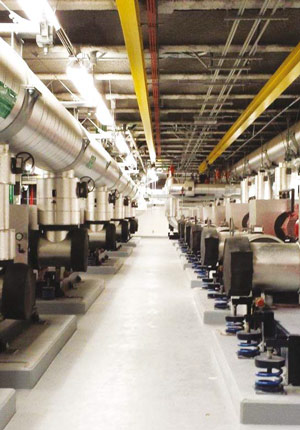
The experts discuss the role of the contractor or builder and explore the combined efforts of the design and construction teams during the construction phase. These dialogues address queries regarding bearing placement, the isolation plane, installation processes, code compliance, and bearing longevity.
Once a contractor is chosen, the most critical phase of the project begins—site inspections by acoustical consultants and bearing suppliers to identify short circuits and flanking of isolation systems. Depending on the type of isolation system and its intricacy, its experts conduct 50 to 100 site visits to inspect the integrity of the isolation plane. The team spends a substantial amount of time in the design phase to help architects and structural engineers understand the specifications of the isolation systems and review how noise and vibration transmissions are mitigated. It generates numerous engineered drawings detailing the installation of bearing pads, tension rods, shear keys, and shear pins for wind and seismic loads. The firm goes beyond its role as a supplier functioning as advisor, educating all participants for a seamless construction process.
“For any isolation project to be successful, acoustical consultants, structural engineers, builders, and suppliers must be on the same page,” says Valerio. “We align the system understanding of all parties involved, eliminating technical uncertainties and fostering pure engineering excellence.”
This approach results in meticulously planned projects with minimum margins for error, saving structural engineers from having to re-engineer building isolation systems. The collaboration helps Mason Industries accommodate multiple variations of isolation themes that conform and evolve with a particular engineer’s or owner’s requirements.
Customer-Centric Practices that Deliver Success
“What makes us different is our passion for getting it right,” says Valerio, explaining the driving force behind Mason Industries’ success.
In the last 30 years, it has completed almost100 building isolation projects globally. An evocative case in point is a recent project in NYC. The Metropolitan Transit Authority identified many marginal properties on or near railway lines—previously used as parking garages and warehouses—that developers wanted to turn into valuable assets. Constructed right above the subway lines, the foundations of these properties were unsuitable for habitable buildings.
-
What makes us different is our passion for getting it right

They have also retrofitted two 400-year-old, culturally significant buildings in London withproximity to subway lines, that were previously used as offices for the Prime Minister and dormitories for Buckingham Palace guards. The two structures had uncertain and complex compositions. The firm used its engineering and structural expertise and successfully retrofitted the buildings, accomplishing a feat unheard of in the industry.
Leading the Way in Structural Engineering
Mason Industries’ track record in structural engineering and building isolation is remarkable. A team of 60 engineers with licenses in all fifty U.S. states, Australia, and New Zealand drives the firm. It combines mold manufacturing and precise steelwork with rubber mixing and molding along with capacities in its factory operations. An advanced computerized testing facility enables its engineering department to carefully design pads that achieve the desired balance between natural frequency and load capacity. The firm recently invested $3 million in equipment to expand its operational capabilities, enabling it to manufacture faster while maintaining higher-quality standards. The firm was able to leverage this mindset and scale amidst supply chain disruptions caused by the pandemic.
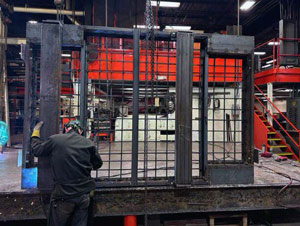
It strategically maneuvered the new market narrative and maintained surplus inventory in its U.S.-based facilities, solidifying its reputation as a reliable supplier. This move also opened up the potential for collaboration across a myriad of projects involving the design of structural elements to mitigate noise and vibration.
Mason Industries stands at the forefront of the structural engineering field, focusing on low-stress, low-strain design, and innovative solutions. Its collaboration with stakeholders, commitment to excellence, and customer-centric approach ensure successful projects and a lasting impact on global urban construction. Its continuous self-improvement and strategic planning mark it as an influential and pioneering presence in the industry.
