
Weekly Brief
Be first to read the latest tech news, Industry Leader's Insights, and CIO interviews of medium and large enterprises exclusively from The Manufacturing Outlook
Lubricant
Top Solutions
Pulsarlube USA
Pulsarlube USA: Transforming Industrial Lubrication with Cutting-Edge Solutions
Bill Zavala, Vice President of Sales
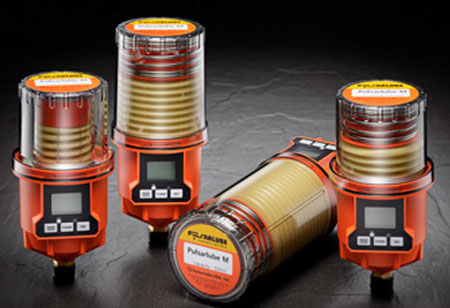
A plant supervisor was sitting relaxed in his office. Being in charge of a floor full of heavy machinery, one would think a bit more concern is warranted, and generally, they’d be right. The supervisor is carefree because they’ve eliminated the most prolific cause of bearing failure — lubrication issues, which can either be from using too much, too little or nothing at all. The plant had Pulsarlube automatic lubricators installed on all of its machinery.
While the market has other offerings, they trust Pulsarlube USA’s mechanical lubricators, which generate enough output pressure to reach 20 feet, which is unparalleled in the industry. Knowing that every nook and cranny of a machine is well lubricated, automatically, on time, and with precise amounts gives the supervisor and many like them peace of mind and allows them to relax.
Pulsarlube USA leads the industrial machinery sector by providing innovative automatic lubricators. It provides world-class automatic lubrication solutions that enhance efficiency and minimize client risk and downtime by addressing common machinery issues like bearing failure. This ultimately leads to significant cost reductions through reduced maintenance downtime.
Pulsarlube stands out among its competitors with its patented 8-bit microprocessor in its devices, which ensures precise lubrication at optimal intervals without the risk of contamination or over-lubrication.
Providing Solutions to Industry Challenges
Before launching Pulsarlube lubricators, the founders conducted a detailed analysis of their competitors to identify potential avenues for improvement.
They actively engaged with customers, surveying their needs and preferences for automatic lubricators. This valuable feedback guided their engineers in designing products tailored to those demands. As a result, Pulsarlube introduced solutions that surpassed the competition, offering enhanced reliability, power, and superior quality—all while prioritizing customer satisfaction.
The edge helps Pulsarlube target some of the most pressing challenges in industrial lubrication.
“We ask our customers to give us their biggest challenge, and 99 percent of the time, we solve it,” says Bill Zavala, Vice President of Sales at Pulsarlube USA.
The scarcity of maintenance personnel is a significant issue that highlights the importance of Pulsarlube’s automatic systems. These systems can lubricate even hard-to-reach parts without requiring the machine to shut down, saving clients thousands of dollars in potential downtime.
Keeping the cost of operations under check is a constant struggle for industries. Since the lubrication is in sync with the machine, no lubricant is dispensed when the machine is switched off and turned on, it continues with the stored lubrication cycle memory, saving money and potential wear-and-tear from faulty lubrication.
Pulsarlube extends the life of machinery and reduces maintenance costs, delivering long-term savings. Its products can handle up to eight lubrication points simultaneously, enabling multipoint installations that minimize excessive labor and the number of devices needed.
While the market has other offerings, they trust Pulsarlube USA’s mechanical lubricators, which generate enough output pressure to reach 20 feet, which is unparalleled in the industry. Knowing that every nook and cranny of a machine is well lubricated, automatically, on time, and with precise amounts gives the supervisor and many like them peace of mind and allows them to relax.
Pulsarlube USA leads the industrial machinery sector by providing innovative automatic lubricators. It provides world-class automatic lubrication solutions that enhance efficiency and minimize client risk and downtime by addressing common machinery issues like bearing failure. This ultimately leads to significant cost reductions through reduced maintenance downtime.
Pulsarlube stands out among its competitors with its patented 8-bit microprocessor in its devices, which ensures precise lubrication at optimal intervals without the risk of contamination or over-lubrication.
Providing Solutions to Industry Challenges
Before launching Pulsarlube lubricators, the founders conducted a detailed analysis of their competitors to identify potential avenues for improvement.
They actively engaged with customers, surveying their needs and preferences for automatic lubricators. This valuable feedback guided their engineers in designing products tailored to those demands. As a result, Pulsarlube introduced solutions that surpassed the competition, offering enhanced reliability, power, and superior quality—all while prioritizing customer satisfaction.
The edge helps Pulsarlube target some of the most pressing challenges in industrial lubrication.
“We ask our customers to give us their biggest challenge, and 99 percent of the time, we solve it,” says Bill Zavala, Vice President of Sales at Pulsarlube USA.
The scarcity of maintenance personnel is a significant issue that highlights the importance of Pulsarlube’s automatic systems. These systems can lubricate even hard-to-reach parts without requiring the machine to shut down, saving clients thousands of dollars in potential downtime.
Keeping the cost of operations under check is a constant struggle for industries. Since the lubrication is in sync with the machine, no lubricant is dispensed when the machine is switched off and turned on, it continues with the stored lubrication cycle memory, saving money and potential wear-and-tear from faulty lubrication.
Pulsarlube extends the life of machinery and reduces maintenance costs, delivering long-term savings. Its products can handle up to eight lubrication points simultaneously, enabling multipoint installations that minimize excessive labor and the number of devices needed.
Lubricant Info
Q1
What Do Top Lubricant Manufacturing Companies Do?
Top Lubricant Manufacturing Companies develop and supply oils, greases, fluids and specialty lubrication products used to reduce friction, manage heat and limit wear in industrial equipment. Their work supports bearings, gears, compressors, conveyors, hydraulic systems and production machinery that must run under pressure, temperature variation or contamination risk. Strong lubricant manufacturing companies also help users match product chemistry to real working conditions, including load, speed, moisture, food-contact rules or maintenance schedules.
Q2
Why Does Lubricant Manufacturing Matter to Industrial Buyers Now?
Machine downtime, energy waste and premature part failure have made lubrication a practical cost issue, not just a procurement line item. Top Lubricant Manufacturing Companies matter because the right product can extend service intervals, protect critical assets and reduce unplanned stoppages. Demand is also shaped by tighter environmental rules, longer equipment life cycles and interest in synthetic lubricants, biodegradable fluids and condition-based maintenance. Industrial lubricant companies are increasingly judged on performance evidence, formulation control and technical support, not price alone.
Q3
How Should Manufacturers Evaluate Lubricant Manufacturing Companies?
Evaluation should begin with application fit. Buyers need to know whether a supplier understands load ratings, viscosity requirements, contamination exposure, temperature ranges and equipment warranties. Documentation matters as well: safety data sheets, compliance records, batch consistency and testing protocols should be easy to review. Reliable lubricant manufacturers also provide guidance on storage, changeover, sampling and disposal. A low-cost product can become expensive if it causes residue buildup, seal problems or shorter maintenance intervals.
Q4
What Business Value Do These Companies Deliver?
The value of Top Lubricant Manufacturing Companies is most visible when machinery runs longer between service events. Better lubrication can lower bearing wear, reduce heat, protect metal surfaces and help maintenance teams plan shutdowns instead of reacting to failures. In heavy manufacturing, mining, food processing or transportation, these gains show up in uptime, cleaner inspections and fewer emergency repairs. Manufacturing lubrication solutions also support consistency: the same line, press or gearbox behaves more predictably shift after shift.
Q5
How Are Technology And Formulation Expertise Changing The Category?
Lubricant development now depends on base oil selection, additive chemistry, lab testing and field feedback. Synthetic fluids, high-performance greases and specialty additives can address oxidation, corrosion, foam control, extreme pressure and water separation. Digital maintenance practices are also changing expectations. Oil analysis, sensor data and equipment history help teams decide when lubricant should be replaced rather than relying only on fixed schedules. The strongest lubricant providers connect product performance with maintenance evidence, not vague claims.
Q6
What Should Industrial Decision-Makers Prioritize When Comparing Providers?
Industrial teams should compare technical depth, product range, testing discipline, delivery reliability and support after purchase. Top Lubricant Manufacturing Companies should be able to explain why a formulation suits a specific machine, not simply provide a catalog match. Buyers should also consider packaging options, inventory planning, regional availability and help during product conversion. The best fit is usually a provider that can reduce friction in the equipment and in the purchasing, maintenance and compliance process.
