




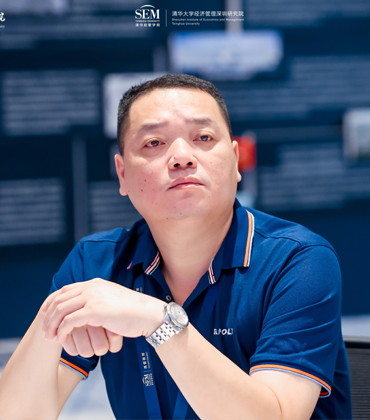
 Kemmy Kang, General Manager
Shenzhen Goldlink Tongda Electronics (GLPOLY) engineers thermal interface materials around real application scenarios instead of relying on standardized solutions. The company partners with electronics and automotive manufacturers to develop customized materials through focused R&D and scenario-based adaptation. This approach directly addresses thermal challenges that conventional TIM providers often overlook. It delivers precise thermal control for compact electronics and high power automotive systems, supporting demanding applications for global clients including Volvo, Siemens and LG.
“We have always upheld our philosophy of technology innovation as core and customer value as priority,” says, Kemmy Kang, general manager.
Engineering Materials around Real-World Conditions
How does GLPOLY’s closed-loop development process improve material performance under real-world conditions?
GLPOLY’s core differentiation lies in how it engineers its materials. Customized R&D and scenario based adaptation are executed through a closed loop system that differs from traditional linear development models. Work begins with demand understanding and scenario analysis, followed by iterative material formulation and full working condition validation. Each stage informs the next, ensuring continuous refinement. Materials are engineered to balance thermal conductivity, temperature resistance and mechanical adaptability within real operating environments.
Multidisciplinary collaboration across materials science, thermal engineering and structural design strengthens this system. Integration across these domains enables development that reflects complete system requirements rather than isolated performance metrics. Applications such as electric vehicles and energy storage systems highlight this advantage, where durability, serviceability and structural precision are equally critical. Removable thermal conductive structural adhesives developed by the company enable non-destructive disassembly under varied conditions, improving maintenance efficiency while supporting sustainability across them product lifecycle.
-
We have always upheld our philosophy of technology innovation as core and customer value as priority.
A six-step engagement model that translates engineering into measurable outcomes structures execution. Initial discussions define application scenarios, constraints and performance targets. Thermal simulations identify heat dissipation challenges at a system level. Based on these insights, materials are selected from a broad portfolio or developed as customized solutions. Samples are produced quickly and tested through both laboratory validation and real world conditions. Final formulations are refined before supporting mass production integration, on site assistance and long term technical alignment with evolving product needs.
Speed, Scale and Measurable Performance Gains
Why are speed and flexibility important in selecting thermal interface materials for engineering applications?
Beyond engineering capability, speed and selection flexibility directly shape its engineering decisions. Standard samples are delivered within twenty-four hours, while customized materials are ready within three to five working days, enabling engineers to test and refine designs immediately. Combined with a comprehensive TIM portfolio, this allows customers to evaluate multiple options within a single ecosystem, simplifying material selection and reducing dependency on multiple vendors.
Performance outcomes are equally strong. The company’s silicone-based materials achieve high thermal conductivity ranging from 0.8 to 20 W/m.K, while non-silicone variants extend operational limits across extreme temperature ranges from -55°C to 200°C. Patent backed ageing resistance, along with ISO9001 and IATF16949 certifications, strengthens reliability across extended operating cycles.
The impact of GLPOLY’s working model is clearly demonstrated in its collaboration with NIO. During development of a high density e-drive module, thermal challenges emerged due to compact design and increased power load. Conventional materials failed to meet stability requirements. A customized silicone thermal pad of 1.2 mm was developed, reducing e-drive temperature by eight degrees and power module temperature by twelve degrees. Validation was completed within fifteen days, while battery applications achieved 0 ppm quality delivery for 10,000 units with stable long-term supply.
In what way does GLPOLY validate performance through testing and real-world deployment scenarios?
With an automated production base in Dongguan, GLPOLY ensures consistent quality, scale and reliability across demanding applications. Its scenario driven engineering model builds on this foundation, transforming thermal interface materials into performance enablers that deliver predictable reliability, accelerate development and ultimately define the future of high performance thermal management.
