


 Sajith Manikath, Vice President
Toromont Material Handling, a division of Toromont Industries with annual revenues of $5.02 billion, is a leading provider of material handling solutions in Canada. The company specializes in helping businesses transition smoothly to more efficient material handling systems. With expertise across all five forklift classes and experience serving industries such as manufacturing, automotive, food and beverage, government, logistics, and retail, Toromont is uniquely positioned to deliver results.
“In our fleet, we proudly feature premium brands of electric forklifts, including CAT, Jungheinrich, Kalmar, and more. Recently, one of our customers in the automotive industry successfully converted their entire fleet of 140 propane trucks to CAT electric forklifts. We are thrilled to support this transition to electrification,” says Sajith Manikath, Vice President at Toromont Material Handling.
Electrification of Forklift and Material Handling Fleets
Transitioning forklift and material handling fleets to electric models comes with its own set of challenges. Customers shifting to electrification may face inefficiencies, leading to increased downtime and higher costs. Unlike propane or diesel trucks, which only require a quick LPG tank replacement at the end of a shift, electric forklifts rely on a structured charging routine. The charging process varies depending on the energy solution and system in place, requiring operators to charge forklifts during breaks to maintain an optimal state of charge.
Based on our test data and customer demonstrations, a CAT electric lift truck with 5th generation 3-phase AC technology shows 26% higher lifting performance and 10% lower energy consumption compared to other AC electric forklift brands in the market
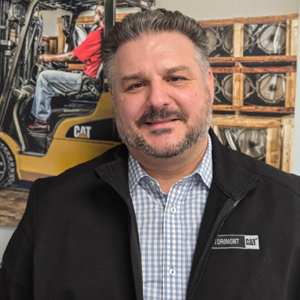 Mark Fratelli, Field Service Supervisor
 The company’s Jungheinrich outdoor pneumatic electric trucks are designed for heavy-duty applications in dusty, dirty, and humid environments, as well as for outdoor use. Critical components are sealed with SAAB connectors and high ingress protection to safeguard against environmental elements.
Toromont takes immense pride in delivering exceptional material handling services, ensuring efficiency, safety, and reliability in every aspect of its work. The company’s commitment to excellence is reflected in its highly trained service team, whose expertise guarantees that every repair is executed with precision and professionalism. It continuously invests in cutting-edge technology, including advanced diagnostic tools and modern equipment, to streamline operations and enhance efficiency.
-
Through a combination of energy solutions, fleet digitalization, and automation, we have helped our customers revolutionize their operations, moving from traditional IC forklifts to electric forklifts across multiple plants in the U.S. and Canada
With 15 branches across six provinces, a team of over 200 skilled technicians, and 24/7 on-call support, Toromont is dedicated to meeting the unique needs of each client. Its customer-focused approach fosters long-term partnerships that drive mutual success. At Toromont, it doesn’t just move materials—it moves clients’ businesses forward.
The Benefits
While the push for sustainability brings value, equipment uptime still poses a major concern. Many businesses struggle to keep their equipment running efficiently, forcing them into short-term rentals or preventing them from meeting throughput and productivity goals. Conversely, some businesses end up with excess fleet capacity they don’t actually need, leading to increased costs, lower productivity, and redundant equipment.
Electrification significantly improves equipment uptime. Toromont’s electric forklifts have fewer moving parts than IC models, reducing wear and tear and minimizing unexpected breakdowns. This simplifies maintenance and repairs while lowering the likelihood of unplanned downtime.
With reduced maintenance requirements, faster diagnostics, and extended battery life, businesses can achieve greater operational continuity. Additionally, opportunity charging capabilities allow forklifts to recharge during breaks, eliminating the need for long refueling stops and keeping fleets operational for longer.
 Aria Amjadi, Major Account Manager
 Another advantage is their compact design. The battery in an electric forklift doubles as a counterweight, allowing for a shorter turning radius. This feature improves maneuverability, making it easier to navigate tight warehouse aisles and optimize storage space.
Switching to electric forklifts also significantly reduces noise pollution. Electric models operate at around 70 dB— comparable to a normal conversation— while propane forklifts generate approximately 92 dB, similar to the noise of a jackhammer. A quieter workplace enhances communication and improves employee comfort, resulting in a more productive environment.
Furthermore, electric forklifts eliminate exposure to harmful fumes, ensuring cleaner air for operators and warehouse personnel. Unlike ICpowered forklifts, which produce exhaust emissions, electric models offer a healthier and safer alternative, reinforcing their value as a smart investment for modern warehouses.
The Shift from IC to Electric Forklifts in Action
“Through a combination of energy solutions, fleet digitalization, and automation, we have helped our customers revolutionize their operations, moving from traditional IC forklifts to electric forklifts across multiple plants in the U.S. and Canada,” says Aria Amjadi, Major Account Manager at Toromont Material Handling.
For example, the company played a pivotal role in guiding a client’s electrification journey by evaluating energy solutions, conducting power studies, and performing engineering assessments to identify the most efficient and sustainable option. To ensure financial viability, Toromont conducted a detailed ROI analysis comparing IC forklifts to electric units, assessing capital and operating costs while determining the breakeven point for maximum financial benefit.
 Hariprasad Manavalan, Business Manager
 Automation was the next step, particularly in industries like food and beverage, automotive, and manufacturing. Toromont collaborated with the customer’s management to explore advanced, cost-effective automation solutions. By analyzing two years of data, Toromont provided measurable insights into cost savings, efficiency gains, and process improvements.
“The results were substantial—100 electric units deployed across U.S. and Canadian plants, driving safety, sustainability, and profitability. Additionally, a leading automotive manufacturer saved $163,126.33 at their site by transitioning from an LPG to an electric fleet, reducing energy costs, downtime, and maintenance expenses.
Based on our test data and customer demonstrations, a CAT electric lift truck with 5ᵗʰ generation 3-phase AC technology shows 26% higher lifting performance and 10% lower energy consumption compared to other AC electric forklift brands in the market,” says Hariprasad Manavalan, Business Manager at Toromont Material Handling.
The Present and Future of Material Handling
Along with electrification, Toromont is embracing three major megatrends that will shape the material handling industry over the next decade: electrification, digitalization, and automation. These transformative forces are driving efficiency, sustainability, and productivity, redefining how businesses operate.
While electrification leads the shift toward greener, more energy-efficient solutions, Toromont is making significant advancements in its offerings. On the digitalization front, the company leverages data collection and IoT technology for forklifts. These systems gather real-time insights—such as forklift usage, load status, and operator safety protocols—to enhance operational efficiency.
Automation is the ultimate productivity driver. For repetitive tasks, such as moving goods between fixed points 24/7, fully autonomous vehicles are becoming the preferred solution. Beyond material movement, automation also extends to ancillary functions like floor cleaning.
So, isn’t adopting these smarter solutions the best move forward? Absolutely.
