




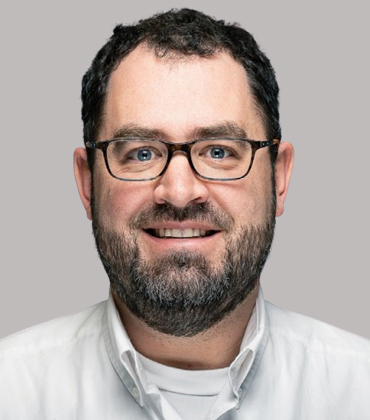
 Tim Weiser, President
Weiser Engineering operates in environments where electrical power cannot be allowed to ‘almost fail.’ Industrial facilities rely on uninterrupted uptime to protect safety, production, and commitments, and the company makes electrical systems predictable under real operating conditions. The firm provides end-to-end electrical power engineering ownership, with senior engineers directly accountable from initial assessment through commissioning and long-term operation.
How does an owner’s engineer model improve accountability across electrical system lifecycles?
Rather than functioning as a traditional consultant, Weiser Engineering serves as the owner’s engineer, embedded in daily decision-making and responsible for how systems perform. This execution-first model has made the firm a long-term partner to industrial operators who cannot afford ambiguity in their power infrastructure.
Across the industry, electrical reliability is undermined not by catastrophic failures, but by near-misses. Reactive maintenance, fragmented vendors, and late-stage problem solving leave engineers stretched thin and outages feeling inevitable. Weiser Engineering removes that uncertainty by owning system intent and performance before problems surface, turning electrical power infrastructure into a controlled, strategic asset.
From the outset of every engagement, senior engineers remain hands-on. The firm does not hand projects off after studies or design packages. Responsibility extends through specification, procurement support, construction coordination, commissioning, and operational handover. Growth has followed this model naturally through repeat engagements rather than marketing-driven expansion.
“We’re not focused on chasing volume,” explains Tim Weiser, president. “Clients rely on us because we stay accountable across the full life cycle of their facilities and that consistency builds trust.”
That accountability has become critical as industrial owners contend with supply chain disruptions, equipment delays, and rising uptime expectations. Acting in the owner’s best interest, Weiser Engineering integrates early-stage equipment procurement into the design process. Securing long-lead components before contractors mobilize protects schedules and preserves engineering intent, preventing last-minute substitutions that introduce risk.
The firm’s ownership model has also required stepping into roles many engineering companies avoid. For a long-standing client, the sudden loss of an electrical contracting firm threatened active projects. Rather than allowing execution risk to fall on the owner, Weiser Engineering helped establish a dedicated electrical contracting entity to maintain continuity. This ensured installations aligned with the original design and commissioning requirements. While the move increased responsibility for the firm, it eliminated uncertainty for the client and protected outcomes.
-
We’re not focused on chasing volume. Clients rely on us because we stay accountable across the full life cycle of their facilities and that consistency builds trust.
In what way does long-term system design improve uptime and operational resilience?
At the technical core of Weiser Engineering’s work is a long-term view of system performance. Design decisions are evaluated not only for commissioning success, but for decades of maintenance, expansion, and fault response. Every project begins with a clear assessment of existing infrastructure, followed by alignment with the owner’s growth plans. Designing for uptime is not limited to redundancy, it is about systems that can be serviced, reconfigured, and repaired without disrupting operations.
This approach shapes both primary and secondary distribution design. Primary systems are engineered for future capacity and flexibility, while secondary systems are configured to allow controlled load transfers during failures. Detailed modeling, grounding studies, and arc flash evaluations frequently uncover undocumented modifications, undersized feeders, or equipment no longer rated for available fault currents. Identifying these conditions early allows owners to act before risks become incidents.
Technology supports this execution discipline. Using SKM for power system modeling and BIM platforms like Revit, Weiser Engineering develops coordinated digital models that provide accurate short-circuit data, feeder lengths, and arc flash labeling before energization. Advanced relay programming using Schweitzer systems enables real-time fault detection and remote diagnostics, reducing downtime and accelerating recovery.
This operating model has earned Weiser Engineering recognition as the Top Electrical Power Engineering Design and Consulting Service, reflecting its commitment to senior-led execution, accountability through commissioning, and long-term system stewardship.
As a service-disabled, veteran-owned business, Weiser Engineering approaches electrical power engineering as a responsibility, not a transaction. Clients gain electrical systems they can rely on to support growth, and remain safe under pressure. By serving as the owner’s engineer in environments where reliability is non-negotiable, the firm eliminates coordination gaps, delivering certainty.
