
Weekly Brief
Be first to read the latest tech news, Industry Leader's Insights, and CIO interviews of medium and large enterprises exclusively from The Manufacturing Outlook
The Manufacturing Outlook: Specials Magazine
Industrial Automation
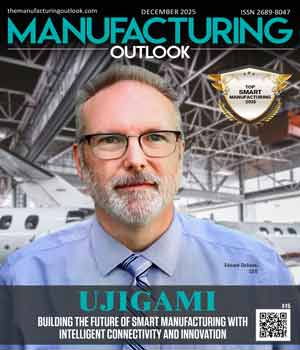
Ujigami
Building the Future of Smart Manufacturing with Intelligent Connectivity and Innovation
The need for seamless connectivity, automation, and real-time decision-making has never been more critical in the evolving world of smart manufacturing. As the global manufacturing landscape continues to embrace digital transformation, companies are looking for solutions that help optimize their processes and connect disparate systems and machines, which are often built on different technologies. Ujigami, a forward-thinking technology company, has emerged as a leader in this space, offering a robust solution that empowers manufacturers to achieve smarter, more efficient operations without requiring them to overhaul their entire infrastructure. Founded to bridge the gaps in manufacturing technology, Ujigami provides a comprehensive platform that combines connectivity, machine intelligence, and real-time decision-making to streamline operations across the factory floor. Under the leadership of CEO Edward Dickson, Ujigami has become an integral partner for manufacturers looking to embrace the future of smart manufacturing Understanding Smart Manufacturing Smart manufacturing encompasses a wide array of technological advancements and strategies that integrate machines, people, and processes to optimize manufacturing performance. For Ujigami, this is more than just automation. It’s about creating a unified system where all parts of the production process are connected, allowing for real-time data exchange and actionable insights that drive better decision-making and improved results. As Edward Dickson puts it, “Smart manufacturing integrates all the different machines, processes, and people with intelligence and business logic to drive best practices.” According to him, the ultimate goal is to enable manufacturers to achieve outcomes like the lowest possible cost, the highest quality, minimal scrap, and faster time to market—all key indicators of manufacturing excellence. “It’s about driving the optimal result in real-time based on data collected from all aspects of the manufacturing environment,” he explains.
Las Vegas Institute of Welding (LVIW)
Delivering Expert Welding Education with Purpose
Eric Roper, Founder
Skilled tradesmen are the backbone of countless industries, turning vision into reality with hands-on expertise. However, a growing focus on conventional STEM careers has pushed many people to overlook the trades, resulting in a critical shortage of skilled craftsmen. The Las Vegas Institute of Welding (LVIW), a woman-owned small business, opens doors to successful careers in skilled trades. It offers comprehensive welding courses that prepare students for long-term success. LVIW’s owner and CEO Gabrielle “Brie” Roper has been around the welding and fabrication industry most her life, working alongside her husband, holding ownership, management, and leadership positions in their fabrication and metal finishing companies in Southern Nevada. She realized that finding and retaining qualified welders and fabricators remained a persistent industry challenge. LVIW was founded to address this shortage. It offers courses covering techniques like stick welding, metal inert gas and dual shield. It nurtures individual potential through practical instruction and connects students to successful career opportunities. “We open doors for individuals to get their foot in the welding trade and start building a successful career,” says Eric Roper, Founder. LVIW’s program offers recognized welding certifications from the American Welding Society, equipping learners with official endorsements. Students also earn essential certifications that emphasize workplace safety and readiness, including OSHA 10, forklift operation and CPR..

Industrial Equipment

Precision, speed and reliability aren’t just goals; they’re non-negotiables in high-stakes industries like aerospace, defense, and automotive. Manufacturers are constantly racing against the clock to deliver complex parts, often in high volumes, without compromising quality. But when traditional processes hit a wall—whether it’s due to outdated tooling, lead time bottlenecks, or design constraints—Baker Industries, a Lincoln Electric company, is the one to call. The company merges cutting-edge machining and fabrication with next-generation large-scale metal additive manufacturing/3D printing (AM) to deliver fast, flexible and precise solutions that meet production demands and drive innovation. In one instance, the U.S. Army Corps of Engineers needed to replace a failing, pre-World War II component critical to the operation of the Soo Locks—a vital trade link connecting Lake Superior to the rest of the Great Lakes. The original casting process would’ve taken 18 months. Yet, Baker Industries engineered and delivered the part in just 12 weeks, using a combination of AM, fabrication, and machining, avoiding a potentially massive disruption in GDP. This instance exemplifies just how far the company’s capabilities can go under pressure. From its origins as a small, family-run shop in the early 90s, Baker Industries has focused on continuous improvement to bring more value to clients. The company built its name on five-axis machining long before it became standard across the Midwest. From there, it has evolved to use a hybrid of machining, fabrication, and AM to create practical solutions for problems, as seen with the Soo Locks. The move into AM was about increasing speed and flexibility in solving high-stakes problems. In the early 2010s, powder bed fusion and thermoplastic AM capabilities were added to the list, and more recently, the company installed two of Lincoln Electric’s proprietary SculptPrint™ 1500 robotic wire-arc additive manufacturing (WAAM) systems. These capabilities allow engineers to easily select the best manufacturing process for their project from a single supplier. “We’re here to solve problems with all the tools at our disposal,” says Jerry Kablak, sales and estimation manager. “That means being willing to rethink everything, including how fast we can get something done.”
Chemical Manufacturing

3D Printing is Evolving from a Niche Process to High-Volume Manufacturing Technology
Alex Sant'Anna, Vice President Americas, Coating & Adhesive Resins, Evonik
Industrial Automation

Stacked Control Assessment (SCA) Approach for Production Optimization
Robert Lambert, Sr. Director MTS, Noven Pharmaceuticals
Industrial Automation

People and Culture as the Most Important Factors in Digitalization
Walter Pesenti, VP of Manufacturing Excellence and Kyler Tebbutt, Director, Digital Factory Operations, NOVA Chemicals
Industrial Automation

Leadership in Manufacturing
Michael Spliedt, Senior Engineering Manager, Yanfeng Global Automotive Interiors
Industrial Automation
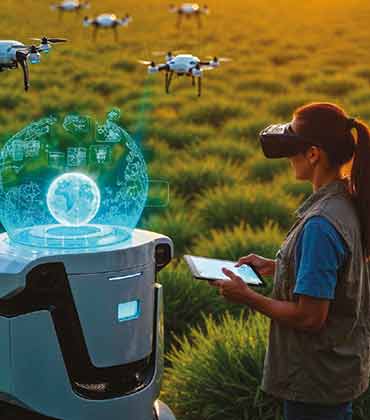
Automation, Connectivity, and Sustainability Driving Multidisciplinary Organizations
Marcelo Varreira, Manufacturing Engineering Director - North America, Electrolux
Industrial Automation

Lean Trends: Navigating Business Requirement Challenges
Juan Carrera, SVP Global Operations and Operational Excellence, Flowserve Corporation [NYSE: FLS]
Industrial Automation

Insights on How to Navigate Modern Manufacturing Applications
Thiago Jube, Process Technology Manager, Barry Callebaut Group

IN MY OPINION
Industrial Automation
Driving Success In Food Manufacturing Engineering
Fernando Garcia Vidal, VP of Engineering, Monogram Foods
LAST WORD
Industrial Automation
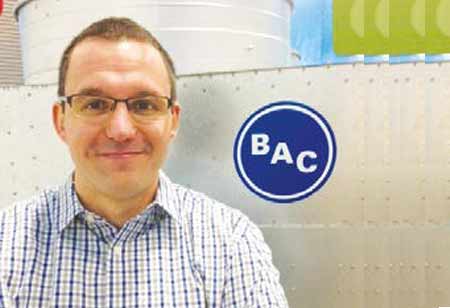
Accelerating Innovation with Additive Manufacturing: Breakthroughs Achieved in Weeks
Yohann Rousselet, Global Director, Technology Innovation, Baltimore Aircoil Company
IN FOCUS
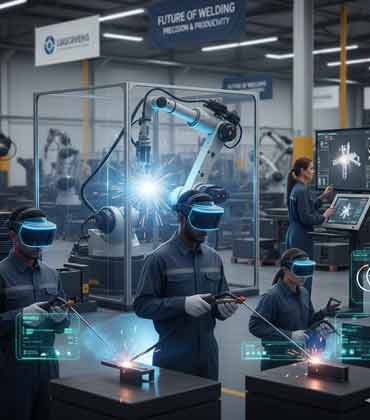
Welding 4.0: The Digital Forces Redefining Manufacturing Strength
Welding is evolving into a high-tech field, integrating advanced training, robotics, and data analytics to enhance workforce skills and drive competitiveness in diverse industries.
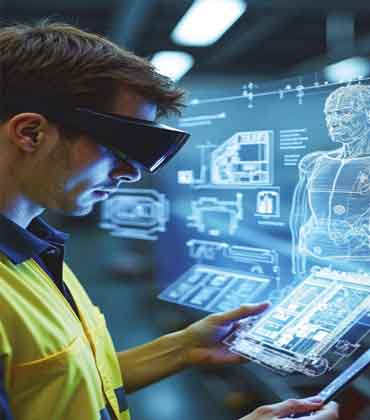
Cognitive Manufacturing: Redefining Industrial Operations with 6G
Industry 5.0 marks a shift to cognitive manufacturing, with 6G enabling real-time, intelligent operations and haptic control, transforming factories into responsive, self-optimizing environments.
EDITORIAL
The Convergence Driving Manufacturing’s Next Frontier
Smart manufacturing is entering a decisive phase as factories transition from fixed processes to adaptive, connected environments that interpret and respond in real time. Plants equipped with IoT-enabled machines, edge computing, digital twins and AI-led quality systems are closing the gap between planning and execution. Production teams now optimize throughput, predict failures and coordinate workflows with precision that seemed unattainable just years ago.
Welding illustrates this transformation vividly. Still central to automotive, infrastructure, energy and aerospace manufacturing, the discipline is being reshaped by robotics, automated inspection, continuous data capture and AI supported controls. Precision welds that once depended on manual craft are increasingly guided by algorithms that measure arc stability, penetration depth and heat behavior as each bead forms.
Training must evolve accordingly. Modern programs incorporate simulation platforms, VR practice, digital twins of weld cells and data informed learning pathways that mirror smart factory operations. Learners receive continuous feedback, real-time analytics and safer skill development, preparing them for workplaces where digital fluency matters as much as technical ability.
The momentum is undeniable. Smart factories cannot reach their potential without a workforce trained to match their intelligence. Machines accelerate efficiency; skilled people determine how that intelligence is applied. The smart manufacturing market is projected to grow from $394.35 billion in 2025 to $998.99 billion by 2032, at a 14.2 percent CAGR.
The magazine features Walter Pesenti, VP of Manufacturing Excellence and Kyler Tebbutt, Director of Digital Factory Operations at NOVA Chemicals, discussing why people, culture and leadership ultimately shape the success of digitalization in manufacturing. An article by Yohann Rousselet, Global Director of Technology Innovation at Baltimore Aircoil Company, explores how additive manufacturing accelerates innovation through rapid prototyping, faster testing and breakthrough design advancements that significantly shorten development timelines across HVAC and industrial applications.
The cover story spotlights Ujigami, an innovation-driven technology company that unifies fragmented factory systems through intelligent connectivity, empowering manufacturers with real-time decision-making, seamless automation and a flexible platform that modernizes operations without costly infrastructure overhauls.
We hope this edition inspires manufacturers, educators and technology leaders to embrace this transformation with confidence, recognizing that the future of industry will be built by intelligent systems and the skilled people who guide them.
