

Wire and Cable

Southern Tool Specialist: Advancing Craftsmanship through Smarter Manufacturing Solutions
Southern Tool Specialist
Southern Tool Specialist: Advancing Craftsmanship through Smarter Manufacturing Solutions
Joshua W. Bruce, Vice President of Sales & Business Development
Since 2001, Southern Tool Specialist (STS) has been helping manufacturers push the boundaries of productivity, quality and safety through advanced assembly tools and integrated manufacturing systems. The goal is to support customers through implementation and long-term use rather than simply supplying a product. Over the years, STS has earned its reputation by staying true to a simple belief that the right solution will always outlast the sale.

The company’s foundation in assembly solutions and its early experience in motor vehicle manufacturing taught the team lessons about process control, ergonomics, repeatability, and quality. Today, STS has expanded into all manufacturing segments from light electronics into transportation, energy, defense, recreation, and everything in between.

“No matter the industry, our approach has always been to understand the process, engineer the right solution, and stand behind it, even if it takes years to develop. Patience builds partnerships stronger than any purchase order,” says Joshua W. Bruce, Vice President of Sales & Business Development.

Precision Engineering Strengthening Customer Performance

Aerospace has become one of STS’s active areas of growth in recent years. Working alongside its long-term partner Lübbering, the company has helped major manufacturers such as SpaceX, Blue Origin, Airbus, and Spirit adopt more advanced drilling technology. STS began by serving customers in Alabama, Mississippi, Louisiana, and the Florida Panhandle and has since expanded into the Mid Atlantic, Kentucky, Florida, and select West Coast regions. This reach allows the company to support national projects while working directly with corporate engineering teams to keep local execution aligned with global standards.
California Wire Products: Engineering Woven Wire Mesh Partitions Where Failure Is Not an Option
California Wire Products
California Wire Products: Engineering Woven Wire Mesh Partitions Where Failure Is Not an Option
John Frei, President
How does California Wire Products balance longevity with operational adaptability?

In manufacturing, longevity alone means very little. Plenty of companies survive for decades and still fade into irrelevance. What separates durable manufacturers from forgotten ones is not age, but the ability to adapt operationally without abandoning the discipline that made them reliable in the first place.

For California Wire Products, that balance has been achieved not through diversification or aggressive expansion, but through an unusually focused strategy: mastering a narrow, technically demanding category and executing it with consistency across decades of changing building standards, project complexity, and market cycles.

Founded in 1948, the company began by fabricating wire cages and partitions for industrial storage and security. As facilities grew larger and building codes more stringent, those early products evolved into engineered systems that now serve as critical components in safety, access control, and infrastructure protection. More than 75 years later, woven wire mesh partitions remain the company’s operational core but the environments they serve have become far more complex.

That disciplined evolution has proven decisive in a post-COVID market that pushed many regional fabricators to consolidate, generalize, or exit altogether. Today, California Wire Products stands among a shrinking group of West Coast manufacturers capable of delivering custom woven wire mesh partition systems at sustained volume, a position earned through disciplined focus rather than scale for its own sake.

“At the core, the wire still has to do its job,” says John Frei, president of California Wire Products. “What has changed is how much responsibility that wire now carries within a building system.”

Depth Over Breadth

How does California Wire Products focus its expertise on woven wire mesh partitions?

While many competitors expanded their catalogs to chase growth, California Wire Products made a different choice. The company concentrated on woven wire mesh partitions and closely related systems, resisting the temptation to dilute engineering depth across unrelated offerings.

That decision is reflected in the work itself. More than half of all projects require custom engineering. Installations span logistics centers, manufacturing plants, parking structures, higher-education campuses, public infrastructure, and military facilities, each presenting distinct dimensional constraints, code requirements, and integration challenges.

At the core, the wire still has to do its job. What has changed is how much responsibility that wire now carries within a building system.

For Frei, specialization is not about limitation but control.
Advanced Cable Ties, Inc.: A Legacy of Excellence in Cable Tie Manufacturing
Advanced Cable Ties, Inc.
Advanced Cable Ties, Inc.: A Legacy of Excellence in Cable Tie Manufacturing
William Hodges, Vice President
For over three decades, Advanced Cable Ties, Inc. (ACT) has been a leading force in the mechanical fastening industry, specializing in designing and manufacturing high-quality nylon cable ties.

Founded in 1994 and owned by the Tomasetti family, the company has built its reputation on uncompromising product quality, exceptional service, and a culture that values people as its most important asset. Operating out of Gardner, Massachusetts, ACT serves a diverse range of industries across the United States and worldwide, manufacturing products that meet stringent technical standards and delivering them with remarkable speed.

“Our mission has always been straightforward yet powerful — make quality products in the United States, ensure customer satisfaction, and get them out the door quickly,” says William Hodges, Vice President.

This philosophy has defined the company’s trajectory, enabling it to build lasting relationships with customers, several of whom have been loyal partners for over 30 years.

From Simple Straps to Critical Components in Complex Systems

ACT’s product line, while seemingly simple, plays a critical role in countless applications. The company primarily produces nylon cable ties, small, robust straps used to bundle, secure, and fasten components. These ties are used wherever a reliable fastening solution is required, making them indispensable across multiple industries, including transportation, electronics, electrical systems, data infrastructure, solar energy, plumbing, HVAC, industrial fastening, and specialized military and aerospace applications.

The company’s product catalog includes a wide range of cable ties offered in different lengths and thicknesses, with variations in raw material composition, color, tensile strength, and environmental resistance. ACT can produce ties optimized for high temperature, extreme cold, increased impact resistance or enhanced flexibility, and strict military specifications.

ACT’s designs also include subtle yet practical innovations, such as a holding button that allows installers to secure the tie with one hand—an advantage in environments where space is limited or additional support is unavailable. The company’s cable ties are known for their robust bases, superior tensile strength ratings, and retention capabilities that keep tension longer than competing products.

Producing components that perform at this level requires superior service, swift execution, and engineering skill. Service begins with responsiveness. By manufacturing most of its products, ACT controls production schedules, raw materials, and quality standards, ensuring customers receive fast, reliable support.

Market Dynamics and Innovations in the Woven Wire Mesh Partition Sector

Woven wire mesh partitions are essential elements in various industries, including manufacturing, warehousing, and retail. These partitions are designed to provide security while allowing visibility, making them ideal for applications such as storage areas, equipment enclosures, and retail displays. The versatility of woven wire mesh allows for customization to meet the specific needs of different environments. As the demand for efficient space management and increased security grows, the adoption of woven wire mesh partitions is becoming increasingly important in modern infrastructure.

Emerging Patterns and Influences Shaping the Current Marketplace Landscape

The woven wire mesh partition market is experiencing significant growth driven by various factors. One primary trend fueling this market is the increasing focus on safety and security in industrial and commercial environments. Businesses prioritize secure storage solutions to protect valuable equipment and inventory. Woven wire mesh partitions effectively fulfill this need by offering visibility and a robust barrier.

Another growing trend is the integration of sustainability into manufacturing and construction practices. Companies are adopting eco-friendly materials and production methodologies, appealing to environmentally conscious consumers. Woven wire mesh, often manufactured from recyclable materials like steel, aligns with this sustainability movement, enhancing its marketability.

Customization of woven wire mesh partitions is becoming more prevalent as businesses seek tailored solutions that efficiently utilize space and enhance functionality. Technological advancements also play a pivotal role in shaping market dynamics. The rise of computer-aided design (CAD) software has transformed the design process, allowing manufacturers to create detailed specifications for woven wire mesh partitions with great precision. This capability facilitates the development of customized solutions tailored to specific industry requirements.

Advancements in automated manufacturing processes contribute to increased efficiency and reduced production costs, making it easier for manufacturers to meet the growing demand for woven wire mesh partitions. Emerging trends in safety regulations and industry standards also impact market growth. Many industries are adopting stringent safety guidelines that require secure storage solutions. Manufacturers that align their products with these regulatory standards will likely experience heightened demand, positioning themselves for success in an increasingly competitive landscape.

Significant Technological Advancements Transforming the Sector and Shaping Its Future Dynamics

Advancements in materials science have led to the development of stronger, lighter, and more durable wire materials, enhancing the overall quality and longevity of the partitions. This is critically important in industrial settings where heavy-duty performance and durability are paramount. Innovations in manufacturing techniques, such as laser cutting and advanced welding, empower manufacturers to create intricate designs while maintaining structural integrity. These improvements not only increase production efficiency but also enhance product quality. Consequently, manufacturers can offer a broader array of designs and finishes, allowing for greater customization to meet diverse customer needs.

The implementation of smart technology begins to influence the woven wire mesh partition sector. Sensors and Internet of Things (IoT) technology can be integrated into wire mesh partitions to provide enhanced security features, such as real-time monitoring and alerts. This evolution could significantly increase the appeal of woven wire mesh partitions in sectors that prioritize security, providing a competitive edge for manufacturers willing to embrace these technological advancements.

The increased utilization of automation in manufacturing processes is indicative of the industry’s adaptability to modern demands. Automated assembly lines and computer-controlled machinery lower labor costs and improve production rates. This efficiency enables manufacturers to respond more quickly to evolving market trends and customer preferences, ultimately enhancing productivity and profitability.

Navigating the Complex Landscape of Challenges and Opportunities in Today's World

While the woven wire mesh partition manufacturing sector presents considerable opportunities, it also encounters several challenges. One primary challenge is the intense competition in the market. Numerous manufacturers vie for a share, making it essential for companies to differentiate their products through innovation, quality, and service. Continuous investment in research and development is crucial for staying ahead of the competition, which can place pressure on resources, especially for smaller manufacturers.

Another significant challenge is the volatility of raw material prices. Fluctuations in the costs of steel and other materials can impact production expenses and profit margins. To navigate these challenges, manufacturers must develop strategies to mitigate risks, such as establishing long-term contracts with suppliers or exploring alternative materials that could reduce dependence on traditional raw materials. Despite these challenges, substantial opportunities exist within the industry. The increasing growth of e-commerce and intensified demand for logistics and distribution centers present excellent prospects, as these sectors often require effective partitioning solutions for warehouses and fulfillment operations.

The construction and interior design sectors are increasingly favoring the use of woven wire mesh for its aesthetic and functional properties, broadening the market for manufacturers. The global emphasis on workplace safety and compliance with enhanced safety regulations creates ongoing demand for secure storage solutions across various industries. Manufacturers that can ensure their products meet these regulatory requirements are likely to see increased demand for woven wire mesh partitions, providing a pathway for growth amid competitive pressures. 

ESG Innovation in Cable tie Manufacturing

The cable tie manufacturing industry is increasingly guided by a strong commitment to Environmental, Social, and Governance (ESG) principles. Across every stage of the value chain—from raw material sourcing to final product packaging—manufacturers are embracing sustainable and responsible practices. This evolution reflects a growing recognition that long-term business resilience is inseparable from environmental stewardship, social accountability, and sound governance.

This commitment is not merely aspirational but is being realized through tangible innovation. Manufacturers are transitioning from conventional nylon to bio-based plastics, recycled polymers, and zero-halogen materials, thereby reducing carbon emissions and addressing end-of-life environmental impacts. In addition, growing pressure from corporate clients with stringent sustainability mandates, coupled with evolving international regulations, is driving demand for certified, eco-friendly fastening solutions. As a result, a once-commodity product segment is rapidly transforming into a hub for green technological advancement.

Sourcing: A Foundation of Responsibility

The journey of a cable tie begins with its raw materials, predominantly nylon 6,6. The sourcing of this polymer is a critical focal point for ESG compliance. Traditionally, the industry has relied on virgin plastics derived from fossil fuels. However, there is a discernible industry-wide movement towards more sustainable alternatives. Manufacturers are actively exploring and incorporating recycled and bio-based polymers into their production processes. This transition is not merely a response to regulatory pressures but a proactive measure to reduce the industry's carbon footprint and dependence on finite resources.

Supply chain transparency and traceability have become paramount. There is a growing emphasis on understanding the entire lifecycle of the raw materials, ensuring they are sourced from suppliers who adhere to ethical and environmental standards. This includes conducting due diligence to verify that suppliers are not engaged in practices that harm the environment or violate human rights. The goal is to create a fully transparent supply chain where every component can be traced back to its origin, assuring responsible sourcing. This meticulous approach to procurement is laying a sustainable foundation for the entire manufacturing process.

Manufacturing: Efficiency, Safety, and Waste Reduction

Within the manufacturing facilities, the focus on ESG is multi-faceted, encompassing energy consumption, water usage, waste management, and worker welfare. The injection molding process, central to cable tie production, is inherently energy-intensive. In response, the industry is investing in modern, energy-efficient machinery. Older hydraulic machines are being phased out in favor of all-electric models that consume significantly less power, thereby reducing greenhouse gas emissions.

Water is another critical resource that is being managed with increasing care. Manufacturing plants are implementing advanced water treatment and recycling systems to minimize consumption and prevent the discharge of pollutants into local water bodies. This not only conserves a vital natural resource but also reduces operational costs.

Waste reduction is a key tenet of the industry's environmental strategy. Manufacturers are adopting circular economy principles, aiming to design out waste and pollution from their processes. This includes optimizing production to minimize scrap material and implementing robust recycling programs for any waste that is generated. The off-cuts and rejected products are often reground and reintroduced into the production cycle, minimizing landfill waste.

On the social front, ensuring the health, safety, and well-being of the workforce is a top priority. Adherence to stringent occupational health and safety standards is non-negotiable. This includes providing comprehensive training, personal protective equipment (PPE), and maintaining a safe working environment to prevent accidents and exposure to harmful substances. Fair labor practices, including equitable wages, reasonable working hours, and opportunities for professional development, are also integral to the social component of ESG.

Packaging: Minimizing Environmental Impact

The final stage of the cable tie's journey, packaging, has also come under the ESG lens. The industry is moving away from traditional, often excessive, plastic packaging. There is a concerted effort to utilize more sustainable materials, such as recycled cardboard and biodegradable plastics. The packaging design is also being re-evaluated to reduce the overall volume of material used without compromising the product's protection.

The principles of the circular economy are being applied here as well, with a focus on creating packaging that is easily recyclable by the end-user. Clear labeling with recycling information is becoming standard practice, empowering consumers to participate in the circular economy. This commitment to sustainable packaging not only reduces environmental impact but also enhances the brand reputation of manufacturers perceived as environmentally conscious.

The cable tie manufacturing industry is making significant strides in integrating ESG principles into every facet of its operations. From the responsible sourcing of raw materials and the optimization of manufacturing processes to the adoption of sustainable packaging, the sector is demonstrating a clear commitment to environmental protection, social responsibility, and ethical governance. This holistic approach is not only essential for regulatory compliance but is also fundamental to building a resilient and sustainable future for the industry.

Exploring the Future of Automobile Industry
Toyota North America
Exploring the Future of Automobile Industry
Terrance H. Slaughter, Plant Production Manager

Terrance H. Slaughter began his illustrious career at the grassroots level at Toyota Motor Manufacturing Kentucky, putting doors on Toyota Camry vehicles on the production line every 52 seconds. He currently serves as the plant production manager at Toyota, and his ability to inspire, motivate, and develop his team members positively impacts the organization.

In an interview with Manufacturing Outlook, Slaughter shares his insights on the latest trends and challenges faced by organizations in the automotive industry.

Could you provide an overview of your journey and your current role in the organization?

I’ve been an employee of Toyota North America for over 30 years. During this period, I have worked in various departments like assembly, production, and powertrain. I currently serve as the plant production manager and oversee all the assembly and machining of engine parts.

I recently became a certified Gold Level 5S and 3 Pillar assessor, and I am one of the only two Toyota team members in the U.S. to achieve it. I have always been passionate about employee development and education throughout my career. To support this, I actively participate in various community engagements and voluntary services such as Scott County Cardinals Basketball, Scott County Youth Football, YMCA Black Achievers, and the Ed Davis Community Center to help youngsters identify their talents. I also lead activities that educate and develop my team members through a committee. As a board member of the African-American Collaborative, I help uplift and retain African-American talents at Toyota.

What are some leading trends and challenges impacting the manufacturing space today?

One of the significant challenges we face in the manufacturing space is the high turnover rate in the workforce, with people frequently moving between companies. Employees are the heartbeat of any organization, and they must grow and stay with the company. The management has to reconsider its strategies and working environment in favor of the workforce to address this issue.

“Electrification plays a pivotal role in transforming the mobility space, and it encompasses not just vehicles but the entire mobility ecosystem, including the infrastructure that supports it.”

What are some of the strategies that can be adopted so as to overcome these challenges?

The high employee turnover rate can be minimized by focusing more on education, development, and retention strategies. Supporting employee resource groups can play a crucial role in retaining talents. Organizations can also implement various initiatives that improve business acumen and provide comprehensive training for their employees. It can even support employee’s education through college reimbursement programs to expand their knowledge.

What are some of the technological trends that are transforming the automobile industry today?

Electrification plays a pivotal role in transforming the mobility space, and it encompasses not just vehicles but the entire mobility ecosystem, including the infrastructure that supports it. Additionally, the rise of ride-sharing companies and the looming era of autonomous vehicles will tremendously impact the industry in the near future.

Could you share details about your involvement with a project initiative you have been working on recently?

I am currently working on a project to develop a new engine. My role involves working with a group of supervisors and mentoring new team members on production operations. I am dedicated to supporting and uplifting my team for development. Another aspect of my current focus is maximizing the production efficiency of our machining lines by implementing various initiatives.

What advice would you give to peers and budding professionals in your field?

Becoming acquainted with your team members and providing a safe environment is paramount. Embrace the diversity of your workforce and make sure everyone gets represented. This is an important aspect, and we at Toyota do an excellent job of giving our employees a voice. Be empathetic and offer equal opportunities for all. It's about inviting people to the table, valuing their input, and listening to their concerns.

Using Liquid Thermal Interface Materials in Electronics Manufacturing
PVA
Using Liquid Thermal Interface Materials in Electronics Manufacturing
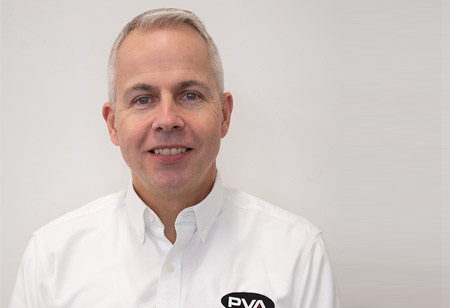
Jon Urquhart, Director, Global Applications Engineering

In the rapidly expanding world of electronics manufacturing, heat management has become a critical aspect of the design and assembly process.  Whether designers are looking to get faster data rates from processor chips or createdense, high-power devices used in electric vehicle infrastructure, it has become more challenging than ever to effectively dissipate heat from the device.  This is where thermal interface materials (TIMs) come into play.

While TIMs come in pad or liquid form, liquids are most commonly used and offer advantages over thermal pads, such as higher thermal conductivity, better conformability to irregular surfaces, reduced thermal resistance, and flexibility in the manufacturing process.  Thermal pads are typically made of materials such as silicone or foam with conductive particles and provided pre-cut to size.  In these days where design and manufacturing flexibility are key, dispensing liquid TIM offers a much more favorable process.

There are several types of liquid TIMs available, including thermal grease, gap filler, and thermal gel. Thermal grease is a silicone or metal-based paste that is dispensed onto to the component surface before a heat sink is mounted.  Gap Filler is typically made up of a two-component silicone formulation that provides not only thermal dissipation but also adhesive properties between the mating surfaces.  The third type of TIM is thermal gel, which is a one-part silicone or urethane product with paste-like consistency that acts like a thermal pad but is in a dispensable liquid form.

"In these days where design and manufacturing flexibility are key, dispensing liquid TIM offers a much more favorable process."

The types of TIMs mentioned above are not all used in the same applications.  Thermal grease is commonly used in applications where a higher thermal conductivity is required such as high power CPUs for data or graphics or in devices with very thin gaps between the device and heat sink.  Gap filler is commonly used where the end product may see high vibration.  Thermal gel is often used in devices where rework-ability may be needed or the module needs to be easily disassembled in the future.  Both gap filler and thermal gels are also used in applications where distance between the mating surfaces may be relatively large and not allow direct contact between the devices.

The application of thermal interface materials is no small feat and should be closely monitored.  Most of these formulations include highly abrasive, conductive particles that can wreak havoc with traditional dispensing equipment, either by quickly wearing down components or packing into restricted spaces and rendering the system unusable.  Dispensing TIM requires understanding of the liquid and a focus on fluid system design in order to maximize device life and maintain the integrity of the TIM during dispensing.  Everything from pump design to fluid routing to materials used in the wetted components should be considered when designing a TIM dispensing system.  Simple choices such as smooth flow fittings and eliminating sharp bends in the fluid path can help maintain fluid flow velocity and prevent separation and packing of fillers.  Other considerations such as using abrasion resistant materials like carbide for valve sealing rods, or simple, low-cost seals that are easy to replace, can help prolong the time and cost of rebuilds.

Thermal interface materials play a critical role in the manufacture of electronic devices of all shapes and sizes.  Dispensing of TIMs has become a standard process for many new devices and the diverse nature of this process is enabling manufacturing efficiencies for an evolving future.

Wire and Cable Info

Q1
What Do Top Wire and Cable Companies Do?
Top Wire and Cable Companies design, manufacture, source or supply cables, wiring systems, harnesses, connectors and related components used across manufacturing, energy, automotive, telecom, construction and industrial equipment settings. The category includes firms serving different load, signal, temperature, movement and safety requirements. Some focus on engineered cable assemblies, while others support volume supply, specialty materials or application-specific configurations. For buyers, the category is less about commodity purchasing and more about matching electrical performance, durability, documentation and delivery discipline to the job.
Q2
Why Does the Wire and Cable Category Matter Now?
Demand is being shaped by electrification, factory automation, grid upgrades, data connectivity, EV platforms and equipment modernization. Top Wire and Cable Companies matter because cable failure can stop production, create safety exposure or delay major projects. Manufacturers are also facing tighter lead-time planning, material price swings and harsher installation environments. In the US market, buyers often need suppliers that can support both standard SKUs and application-driven requirements, from flexible motion cable to high-temperature insulation or custom wire harnesses.
Q3
How Should Manufacturers Evaluate Wire and Cable Companies?
Evaluation should start with the use case, not the catalog. Manufacturers should review voltage rating, insulation material, bend radius, shielding, abrasion resistance, fire performance, certifications and traceability. Reliable wire and cable companies should also show consistency in test documentation, engineering support, labeling, packaging and delivery commitments. Price matters, but a low-cost cable can become expensive if it causes rework, downtime or inspection delays. Procurement teams should examine how a supplier handles substitutions, shortages and specification changes before awarding repeat business.
Q4
What Business Value Do Cable Solutions Companies Provide?
Cable solutions companies create value by reducing installation risk, improving equipment uptime and simplifying maintenance. A well-matched cable can protect signal integrity, withstand oil or heat exposure and reduce premature wear in moving machinery. Standardized labeling and accurate cut lengths also save time during panel building, field service and plant expansion. Top Wire and Cable Companies often support engineering teams earlier in the design process, helping them avoid over-specification, under-specification or material choices that become difficult to source later.
Q5
How Are Technology and Expertise Changing the Wire and Cable Market?
Technical expertise is becoming more important as cables carry power, data and control signals through smaller, hotter and more mobile systems. Smart factories need cable assemblies that tolerate repeated motion, electrical noise and dense routing. Renewable energy and EV-related applications add new requirements around insulation, flame resistance and long service life. Wire and cable manufacturers are also improving extrusion, testing, inventory planning and quality control. The strongest providers combine material knowledge with practical insight into how cables behave after installation, not just during lab testing.
Q6
What Should Manufacturers Prioritize When Comparing Wire and Cable Companies?
Manufacturers should prioritize fit for application, quality history, supply reliability, compliance support and responsiveness when comparing Top Wire and Cable Companies. A useful supplier can explain trade-offs between jacket materials, shielding, conductor type and environmental exposure without pushing unnecessary complexity. Buyers should also look at documentation quality, minimum order flexibility, technical support and the ability to support future maintenance. In this category, a dependable partner is often the one that prevents small specification errors from becoming plant-floor problems.
Take Me Top