
Weekly Brief
Be first to read the latest tech news, Industry Leader's Insights, and CIO interviews of medium and large enterprises exclusively from The Manufacturing Outlook
The Manufacturing Outlook: Specials Magazine
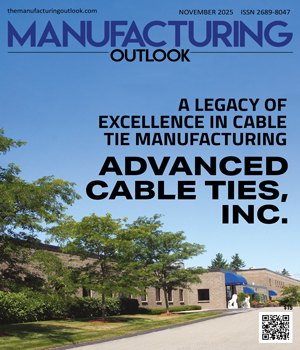
For over three decades, Advanced Cable Ties, Inc. (ACT) has been a leading force in the mechanical fastening industry, specializing in designing and manufacturing high-quality nylon cable ties. Founded in 1994 and owned by the Tomasetti family, the company has built its reputation on uncompromising product quality, exceptional service, and a culture that values people as its most important asset. Operating out of Gardner, Massachusetts, ACT serves a diverse range of industries across the United States and worldwide, manufacturing products that meet stringent technical standards and delivering them with remarkable speed “Our mission has always been straightforward yet powerful — make quality products in the United States, ensure customer satisfaction, and get them out the door quickly,” says William Hodges, Vice President. This philosophy has defined the company’s trajectory, enabling it to build lasting relationships with customers, several of whom have been loyal partners for over 30 years. From Simple Straps to Critical Components in Complex Systems ACT’s product line, while seemingly simple, plays a critical role in countless applications. The company primarily produces nylon cable ties, small, robust straps used to bundle, secure, and fasten components. These ties are used wherever a reliable fastening solution is required, making them indispensable across multiple industries, including transportation, electronics, electrical systems, data infrastructure, solar energy, plumbing, HVAC, industrial fastening, and specialized military and aerospace applications. The company’s product catalog includes a wide range of cable ties offered in different lengths and thicknesses, with variations in raw material composition, color, tensile strength, and environmental resistance. ACT can produce ties optimized for high temperature, extreme cold, increased impact resistance or enhanced flexibility, and strict military specifications. ACT’s designs also include subtle yet practical innovations, such as a holding button that allows installers to secure the tie with one hand—an advantage in environments where space is limited or additional support is unavailable. The company’s cable ties are known for their robust bases, superior tensile strength ratings, and retention capabilities that keep tension longer than competing products. Producing components that perform at this level requires superior service, swift execution, and engineering skill. Service begins with responsiveness. By manufacturing most of its products, ACT controls production schedules, raw materials, and quality standards, ensuring customers receive fast, reliable support.
Metal Working
PEKO Precision Products is a trusted partner, helping companies move from concept to commercialization in electromechanical machinery and other large-scale engineered assemblies. Established in 1966, the full-service contract manufacturer serves a wide range of companies, from innovative startups to Fortune 500 firms across defense, semiconductors, clean energy and medical devices. PEKO provides the infrastructure, expertise and resources needed to close the gap between prototype and market-ready production. Its vertically integrated capabilities and a robust quality management system guides organizations through early-stage designs, DFM initiatives, internal prototype development and project recovery from underperforming or failed suppliers. “Each project is approached with deliberate focus, transforming uncertainty into progress and helping bring our customers’ ideas into reality,” says Mark Frosino, NPI project and sales manager. Companies manufacturing and scaling electromechanical systems often encounter critical hurdles. Some finish the prototyping phase and require structured support to move into stable production, while others struggle to find manufacturers capable of handling their product’s complexity. Many also need quality testing to ensure confidence in every deliverable. PEKO Precision Products turns these complexities into a manageable process. Precision Manufacturing, Seamless Scaling For clients ranging from innovative startups to established OEMs, PEKO’s in-house engineering team transforms core IP into manufacturable products. By refining designs, optimizing for scalable production, and delivering complete technical documentation, PEKO ensures a smooth path from concept to commercialization. Through its New Product Introduction (NPI) process, which encompasses prototyping, design support, DFM initiatives and pilot builds, PEKO ensures that products meet both performance and production requirements. Once a design is production-ready, often companies face bottlenecks due to inefficient manufacturing strategies or escalating production costs that threaten scalability and profitability. PEKO addresses this by aligning product functionality with the cost-effective fabrication route. With a fleet of over 100 CNC machines capable of large-format, tight-tolerance machining, along with a sheet metal and welding division, PEKO offers full in-house fabrication. By integrating engineering and manufacturing early in the process, PEKO empowers clients to make informed decisions on materials, tolerances and build strategy.

Top Gray and Ductile Iron Casting Service 2025
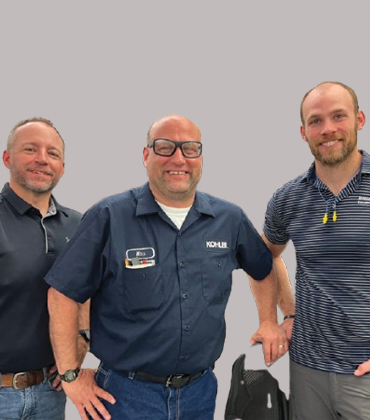
For over half a century, Kohler Industrial Castings has been a trusted partner for manufacturers seeking durable, high-quality iron castings. Established as a division within Kohler Company, it specializes in producing precision gray and ductile iron components tailored to meet diverse manufacturing needs. “We have the resources and staying power to keep growing and supply premium products,” says Sean Wozniak, business development manager. Differentiating Kohler is its ability to deliver consistent quality with fast turnaround, which bridges a critical gap for manufacturers and OEMs seeking reliable domestic suppliers. The focus on quality, efficient production and prompt delivery enables clients to stay on schedule, more than compensating for the lower costs often offered by overseas suppliers. Kohler delivers a complete package of value-added solutions that meet diverse client needs. Leveraging a local network of foundries, machine shops, coating specialists and heat treaters, it coordinates machining, finishing and surface treatments to provide ready-to-use components for clients. Building Long-Term Partnerships through Service-Driven Expertise Kohler builds on the legacy of Kohler Company, which was founded in Wisconsin in the 1870s by an Austrian immigrant. He pioneered enamel-coated products and earned a reputation for craftsmanship and innovation. In 1970, Kohler was established as a standalone division within the parent company and equipped with two automated molding lines. The expansion enabled the division to produce camshafts and flywheels for Kohler’s engine division while developing expertise in complex iron castings for various industries, including automotive, construction, rail, agriculture, and waterworks. Customer referrals added momentum, and the division began to supply additional castings to external markets, gradually moving from passively filling extra capacity to a service-driven model by 1995. Backed by the expertise of its team and the stability of the parent company, Kohler continues to deliver castings that provide lasting value for clients across multiple sectors.
Wires and Cables

Using Liquid Thermal Interface Materials in Electronics Manufacturing
Jon Urquhart, Director, Global Applications Engineering, PVA
Industrial Automation

Lean Trends: Navigating Business Requirement Challenges
Juan Carrera, SVP Global Operations and Operational Excellence, Flowserve Corporation [NYSE: FLS]
Wire and Cable

Encouraging Sustainable Success in Supply Chain Ecosystem
Khari Wilder, Plant Director, The Clorox Company [NYSE: CLX]
Wire and Cable
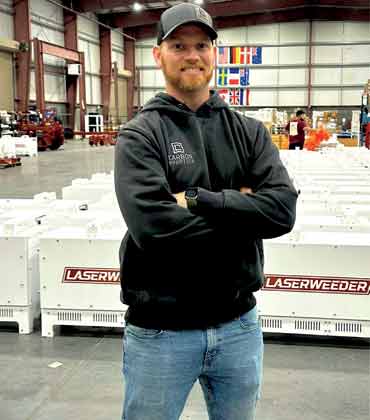
Driving Manufacturing Excellence with Innovation and Quality
Jake Wagner, Director of Manufacturing, Carbon Robotics
Wire and Cable

Driving Operational Excellence in Food Manufacturing
Pablo Perez, VP of Manufacturing/Operations, Oregon Potato Company

IN MY OPINION
Wire and Cable
Sustainability As A Catalyst For Innovation And Growth
Sarah Kuhnell, Director of Sustainability, Worthington Enterprises [NYSE: WOR]
LAST WORD
Wire and Cable
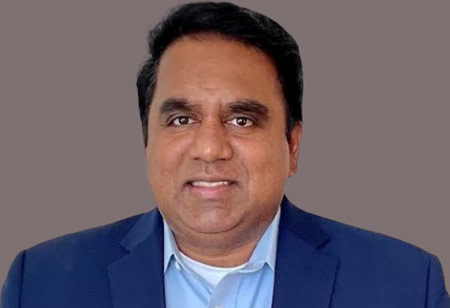
Transforming Advanced Manufacturing through Technology
Leo Antony, Vice President - Advanced Technology, Kymera International
IN FOCUS
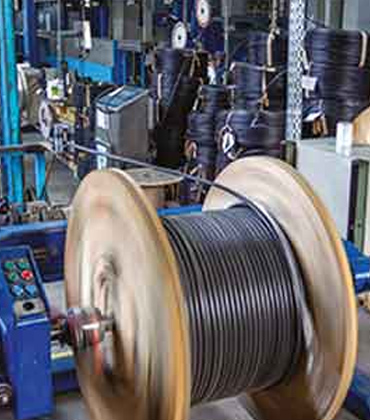
ESG Innovation in Cable tie Manufacturing
The cable tie manufacturing industry is embracing ESG principles by prioritizing sustainable sourcing, efficient manufacturing, waste reduction, and eco-friendly packaging to ensure environmental and social responsibility.

The Business Case for Casting-as-a-Service: Speed, Scale, and Innovation
Modern manufacturing is transforming OEM-supplier relationships, emphasizing deep integration, early supplier involvement, and co-engineering to deliver optimized, innovative casting solutions and new service models such as Casting-as-a-Service.
EDITORIAL
The Future of Intelligent Production
Electromechanical contract manufacturing isn’t the sort of industry that makes headlines until you realize it quietly underpins nearly everything else that does.
In 2025, the sector is undergoing a transformation that challenges the old mass-production orthodoxy. Modular systems and flexible production lines are now shifting from prototype to high-mix, low-volume manufacturing with a speed that would have seemed impossible just a decade ago. Robotics and AI-driven quality control catch defects in real-time and predict failures before they happen. The focus has moved from pure efficiency to something more valuable: agility.
Even in niche segments like cable tie production—yes, cable ties—precision matters. Laser-based marking and cutting systems deliver accuracy while reducing waste. Automated extrusion lines guided by smart sensors maintain consistency at scale. And sustainability is no longer optional: biodegradable materials and closed-loop recycling are becoming baseline expectations.
Perhaps most telling is the rise of digital twins, which are virtual factories that enable manufacturers to simulate and optimize operations before a single part is produced. Cloud platforms are democratizing advanced analytics, enabling real-time production adjustments that previously required entire engineering teams to make.
The global market is projected to surpass $650 billion by 2028, growing at a rate of nearly 7 percent annually. For an industry most people never think about, that’s a vote of confidence worth noticing.
The magazine features a thought leadership piece by Khari Wilder, Plant Director at The Clorox Company, discussing how effective leadership, transparent processes and daily discipline can help improve manufacturing and leverage technology more effectively. It also features an article by Leo Antony, Vice President - Advanced Technology at Kymera International, on how companies successfully turn new technology into real products and business growth.
We hope this edition helps readers understand how automation, AI and strong leadership are driving a new wave of smart manufacturing, from factory floors to global supply chains.
